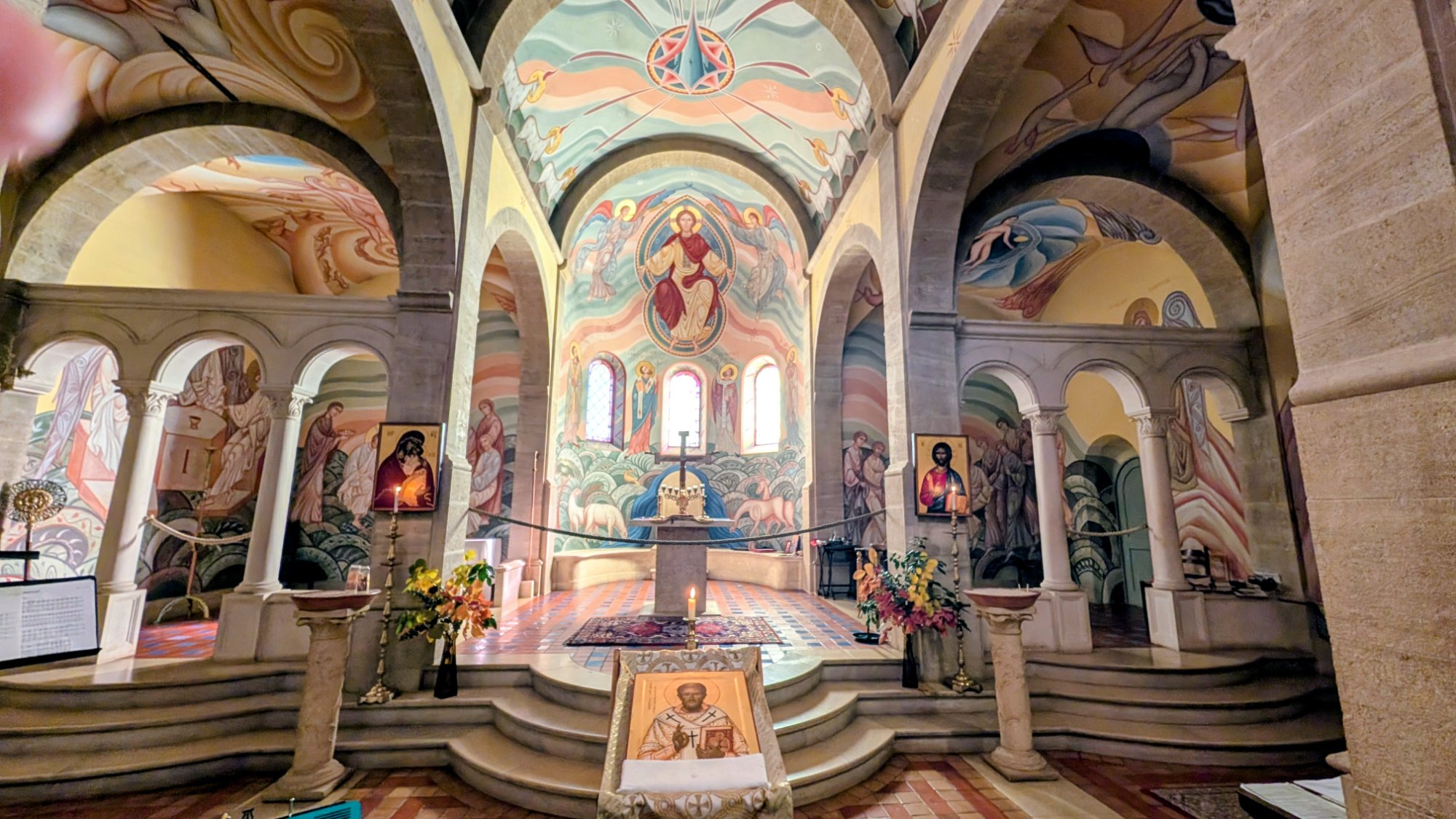
Off the road to Lorgues, an Orthodox monastery hides in the Var garrigue, its church covered in more than 500 square meters of frescoes.
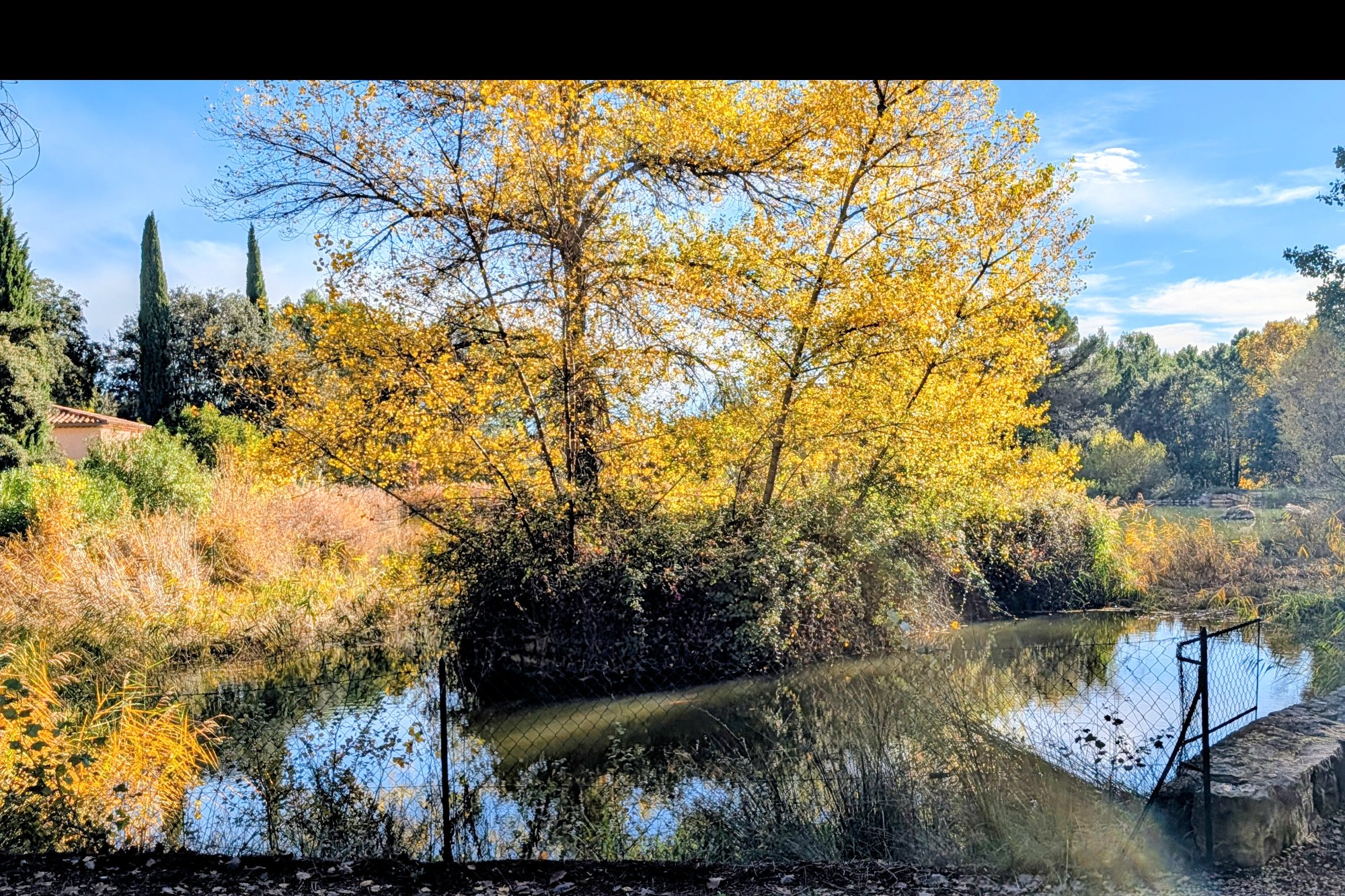
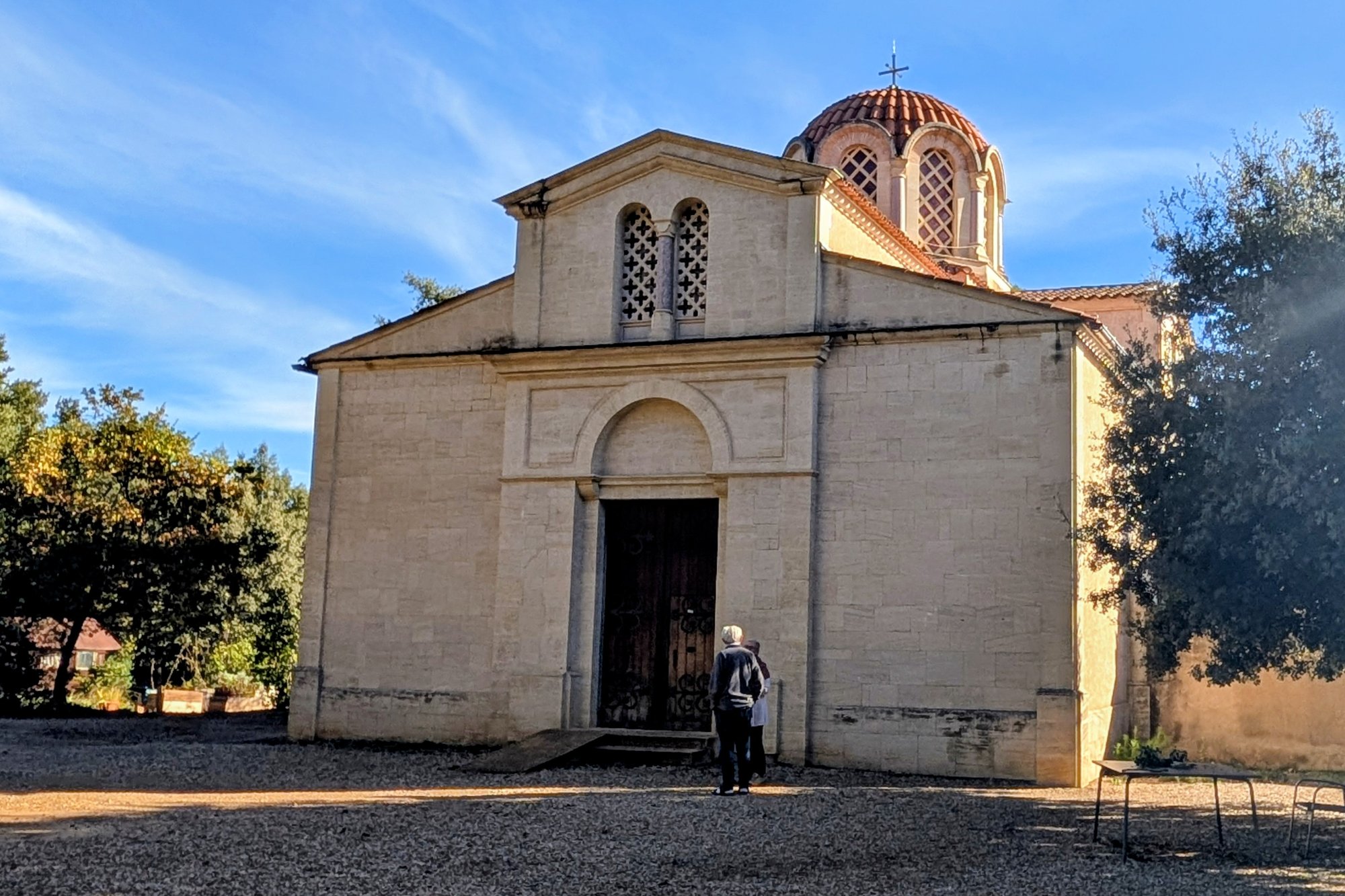
The road from Flayosc to Lorgues runs through quiet, wooded garrigue, the scrubby hill country that covers so much of the inland Var. Most people drive it on the way to somewhere else. At number 1909, a turnoff leads to something few visitors expect to find here: an Orthodox monastery, with a Byzantine-style church, a cloister, and walls inside that are covered in paint.
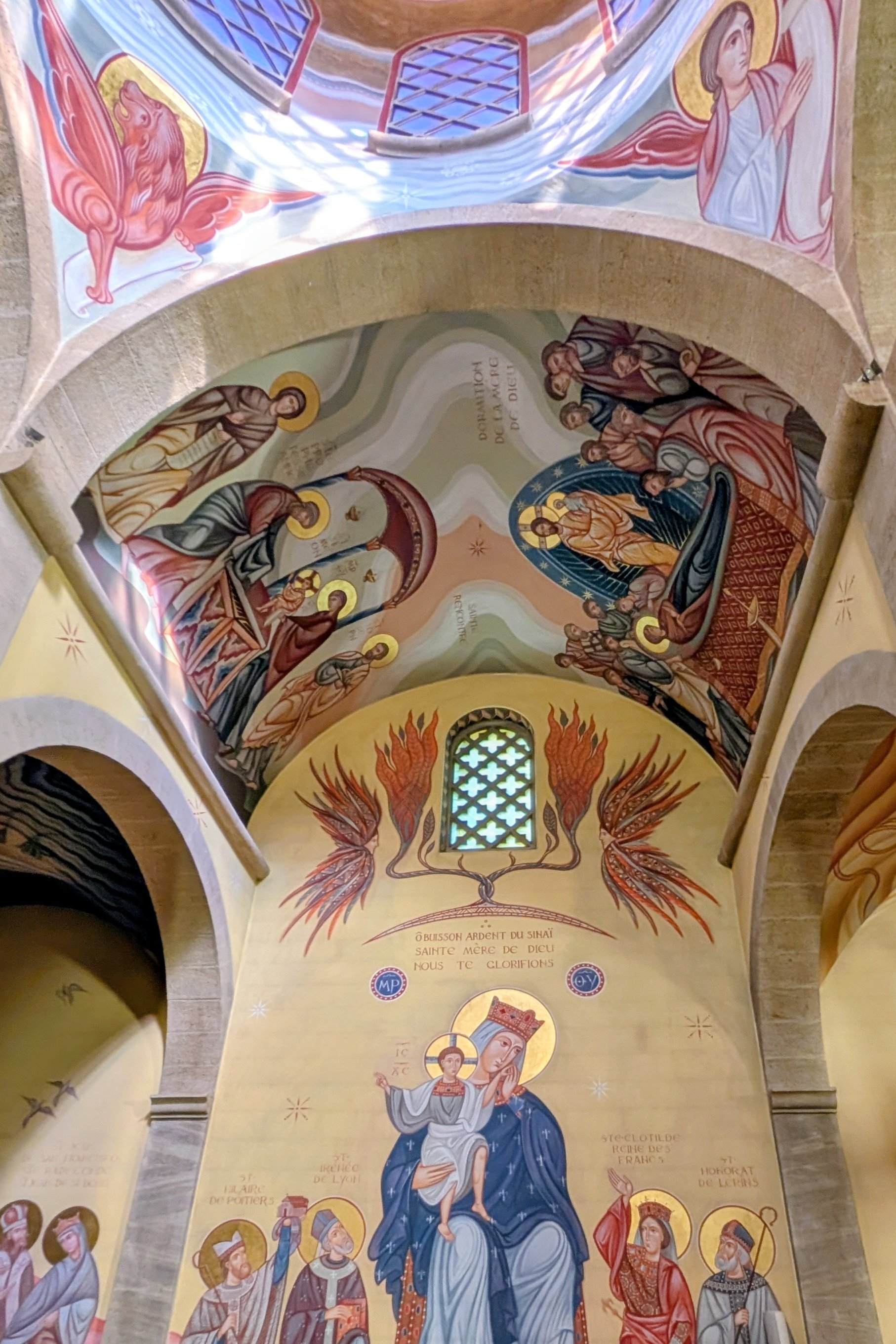
The building follows Byzantine forms, but the paintings look west, to the Romanesque churches of medieval France.
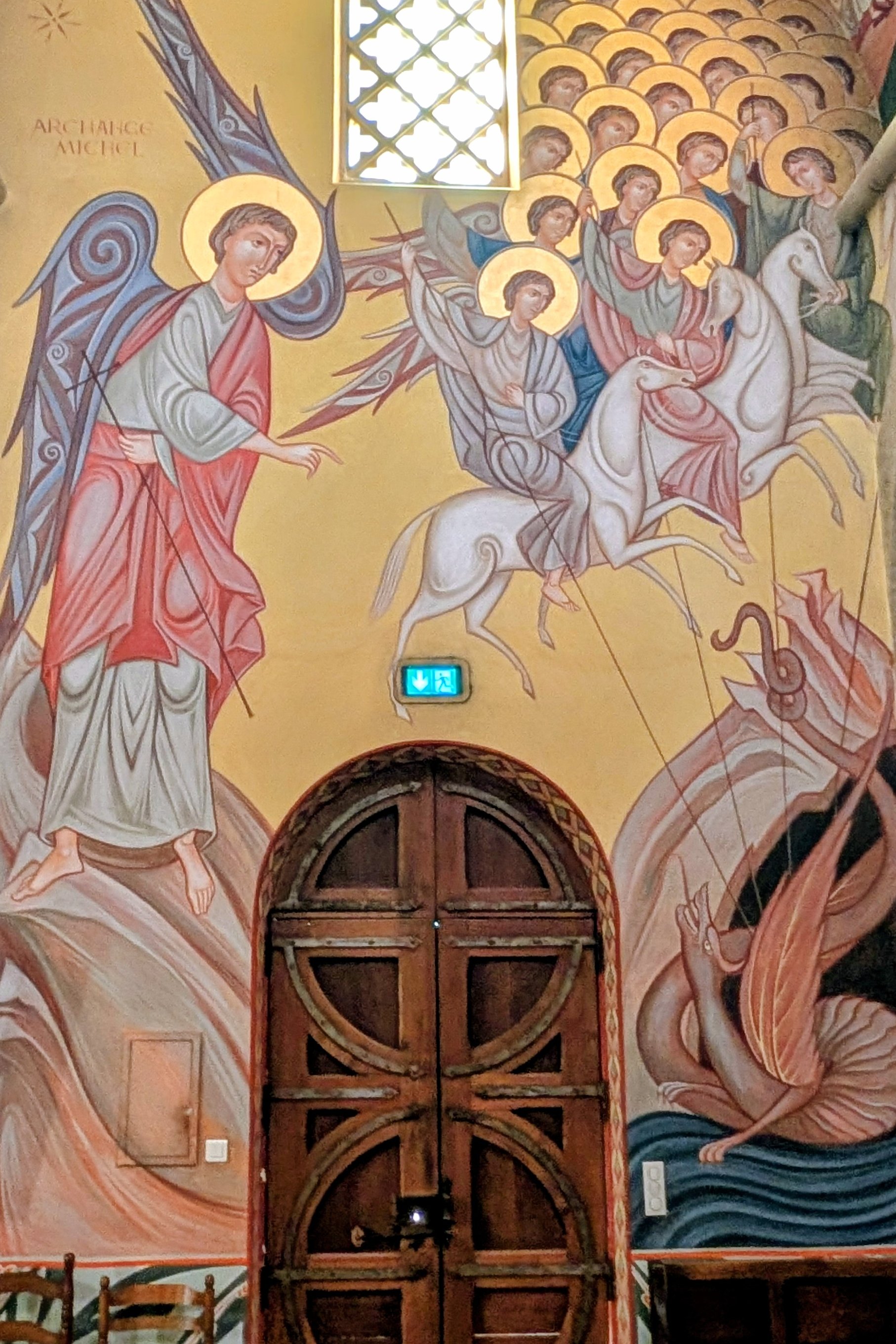
The frescoes are the reason to make the detour. They cover more than 500 square meters, and they are the work of Vadim Garine, a student of the Russian monk Zénon. The community chose him for his knowledge of Romanesque fresco and his feel for it, and that choice is what makes the church so unusual. The building follows Byzantine forms, but the paintings look west, to the Romanesque churches of medieval France. The monks put their fundraising into this one project, and the frescoes were finished in the summer of 2015. The church was formally dedicated over three days, from September 29 to October 1, 2017.
Come for the quiet as much as the art. The monastery calls itself an écosite sacré, a sacred ecosite, and says it is open to everyone, believers or not. Below the church is a crypt dedicated to Mary Magdalene, whom the community calls the apostle of Provence. Several times a day it gathers there for the Prayer of the Heart, an old Orthodox practice of slow, repeated prayer. Up in the church, the Orthodox rosary is said beneath the fresco of Mary.
None of this was here forty-five years ago. In 1981, members of the Notre-Dame de Bethléem parish in Paris felt called to monastic life and went looking for land. They found a stretch of wild, calm garrigue in the middle of the Var. The first monks lived in makeshift housing with no water and no electricity. A borehole soon found water, but the power lines did not arrive until 1986. The first stone of the chapel was laid on September 29, 1982, and in 1990 the community opened a small guesthouse for about twenty people, known today as the Maison Sainte-Marthe.
If you are picturing Greek or Russian Orthodoxy, adjust the picture. The monastery belongs to the Église Orthodoxe Française, a small church founded in Paris in 1975 that describes itself as a local Western church within the Orthodox tradition. It works in French, and the Romanesque walls are part of the same idea: an Orthodoxy that sees its roots in the West.
It is also independent. In 1996 the church withdrew from the synod that had linked it to Ukraine and lost the canonical protection that came with it, and in 2007 it joined the Celtic Orthodox Church and the Orthodox Church of the Gauls to form the Communion of Western Orthodox Churches. Its bishop, Mgr Martin (Laplaud), was consecrated in this church in 2004 and carries the title Bishop of Saint-Maximin–La Sainte-Baume, a name any Var resident will recognize.
Visiting is simple. As of November 2026, the church is open every day, with free visits from 9 a.m. to 7 p.m. Guided visits run on Tuesday, Thursday, Friday and Saturday afternoons from 2 to 5 p.m., and you pay what you wish. Groups book ahead by phone at 04 94 73 12 40. You are welcome at services, which are in French. The Sunday Divine Liturgy starts at 10:30 a.m., and on Tuesday through Friday it starts early, at 7:30. There is parking on site and a small shop, and pets are not allowed. Check the monastery's schedule before a holiday visit, since times can change.
Then drive back out through the garrigue, and the road to Lorgues looks a little different.