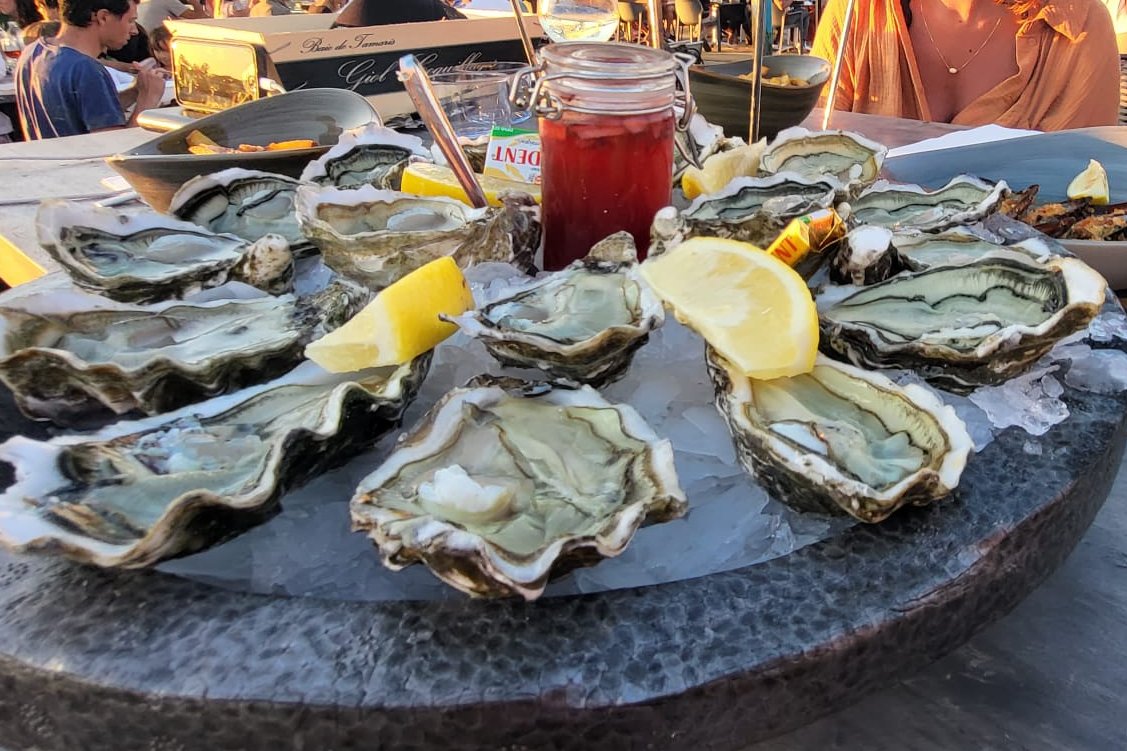
On the Baie du Lazaret, oysters are cemented to ropes by hand, and the people who glue them will also open them for you.
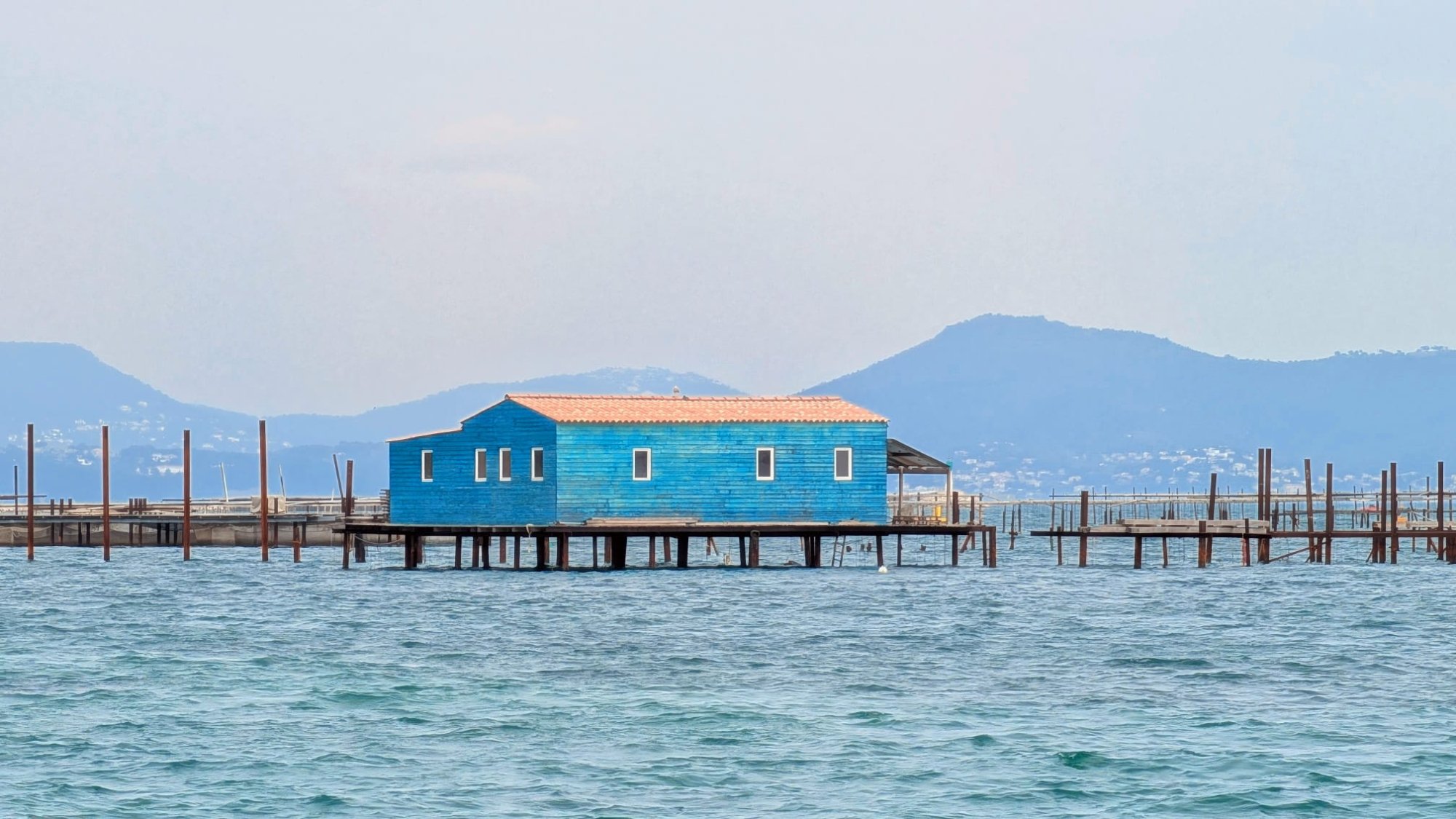
Drive along the corniche at Tamaris, on the La Seyne-sur-Mer side of Toulon's harbor, and the water of the Baie du Lazaret is full of lines. Mussel beds run across the bay in rows, and small huts on stilts stand over them. The regional tourist board says those huts give the bay its personality, and it's hard to argue. You can't wander out to the beds themselves, but you don't need to. Some of the farmers have set up tables a few steps from the water.
From the tables on the allée de la Petite Mer, you can look straight out at the beds your lunch came from.
Shellfish farming in Tamaris goes back to the late 19th century. It peaked in the 1960s, when the bay produced around 1,400 tonnes a year. By 2024 that figure was closer to 100 tonnes. Most of what grows here is mussels, with oysters and other shellfish in smaller amounts, and since the 1980s the bay has also raised fish such as sea bass and sea bream. Look for Tamaris red mussels in particular: only three producers grow them.
The oysters grow hanging. The Mediterranean has almost no tide, so the Atlantic method, bags on low racks that the sea uncovers twice a day, doesn't work here. Instead, farmers in the bay use fixed tables, wooden or metal frames standing in the water, and hang ropes of oysters from them so the shellfish stay submerged all the time. The local technique is called collage sur corde, gluing onto rope, and it is exactly what it sounds like.
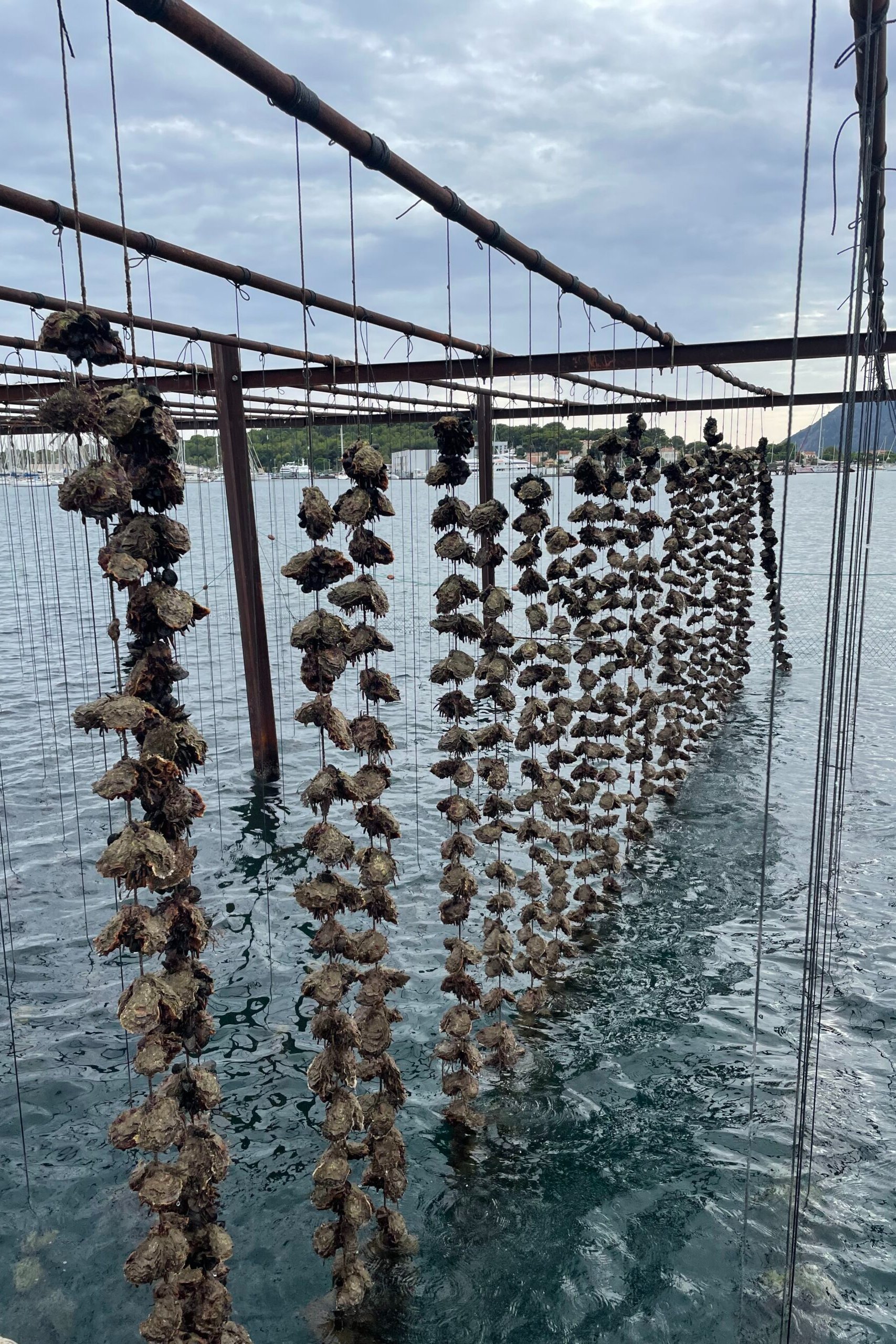
The young oysters usually come from the Atlantic coast, around Arcachon or Charente-Maritime, at about a year old. They spend some time in baskets until their shells round out to about 5 centimeters. Then they are sorted by size and laid out on corrugated trays, in pairs for the larger ones and threes for the smaller, cupped side toward the rope and pointed tip up. Farmers mix Portland cement with seawater into a thick paste, pipe a dab onto the rope and press the oysters into it, one cluster after another. The ropes dry overnight so the cement sets. The next morning they go out by boat and are hung from the tables, where the oysters spend another 12 to 18 months filtering plankton from the bay. Nobody feeds them.
Some farmers go a step further and lift the ropes out of the water from time to time, an artificial low tide that gives the oysters firmer, fuller meat.
The bay is still drawing newcomers. Les Loups d'Or, the fish farm founded by Jérémy Vantouroux, raises sea bass, sea bream and meagre, and in 2025 it started growing oysters on ropes under a new marine concession. The farm has plans for its own building for direct sales, so it's one to watch rather than one to plan a trip around just yet.
Les Perles de Tamaris is the trading name of Coquillages du Sud. The company raises oysters, mussels and fish, sells them at its farm at 158 allée de la Petite Mer, and also has a shop in town where you can sit down to a plate or a platter of shellfish. Its two tourist listings don't agree on the opening hours, so call before you go. Coquillages Gagnot is another of the bay's producers selling direct.
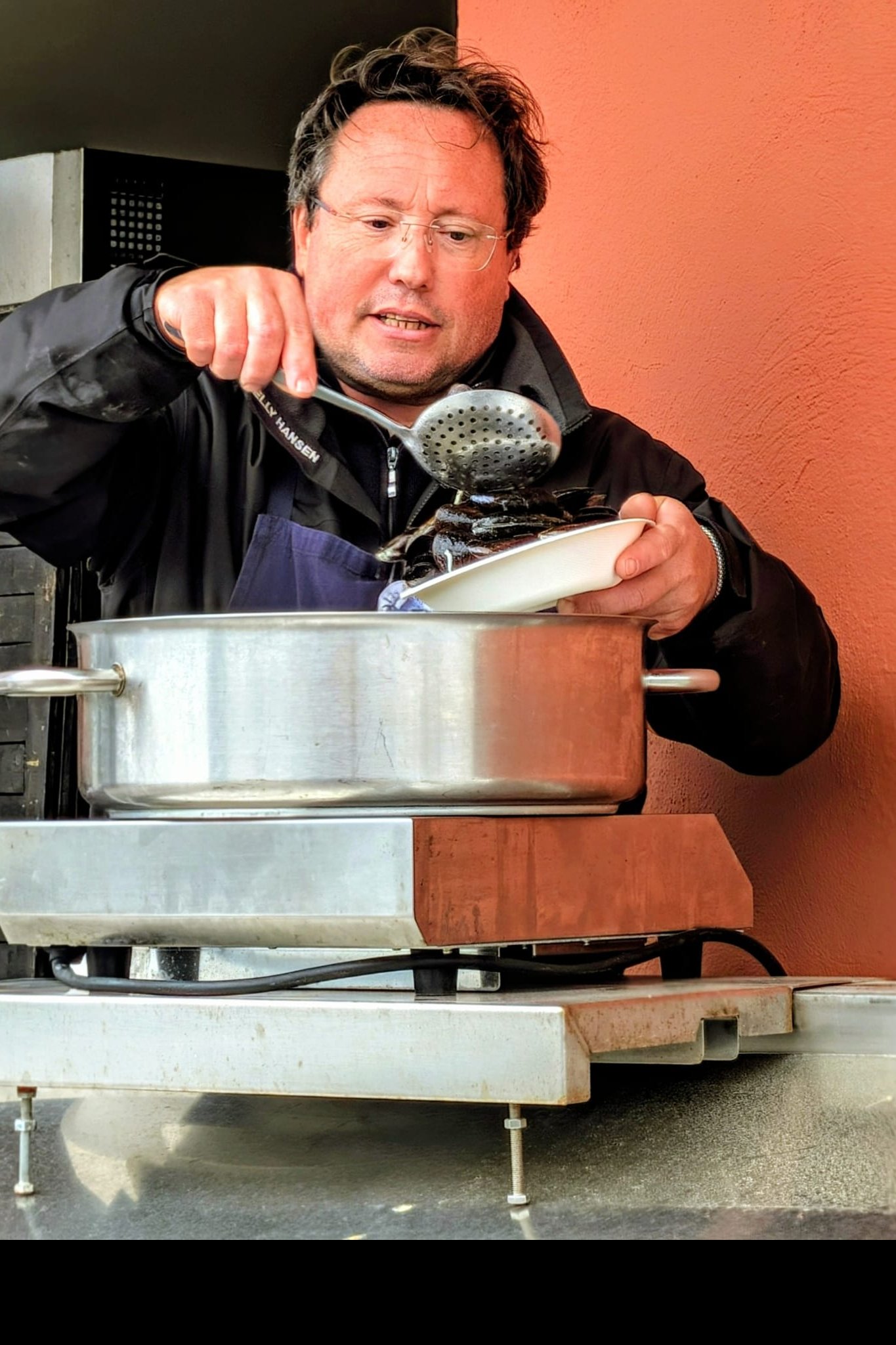
Farther along the same road, at 178 allée de la Petite Mer, AuThentik opened in April 2026. It sells only oysters and mussels from its own farm and serves them at lunch and in the evening. After dark, the mussels go onto a brazier and are grilled right there. AuThentik also lets visitors try the collage themselves: a session of about an hour and a half, run in French, takes you around the farm, has you cement your own oyster rope, and ends with six oysters and a glass of wine.
Now the part that surprises people. In France, a table like this is legally not a restaurant. A tasting at a shellfish farm, the dégustation, counts as an extension of the farmer's own production, and the details are set locally by the prefect and the town. On the Bassin de Thau in the Hérault, for example, a farm can serve only its own shellfish, raw or cooked, with a short list of extras such as bread, butter, lemon, wine and beer. We're still confirming the exact rules on the Lazaret, but the spirit is the same: you come for the shellfish, and the menu mostly stops there.
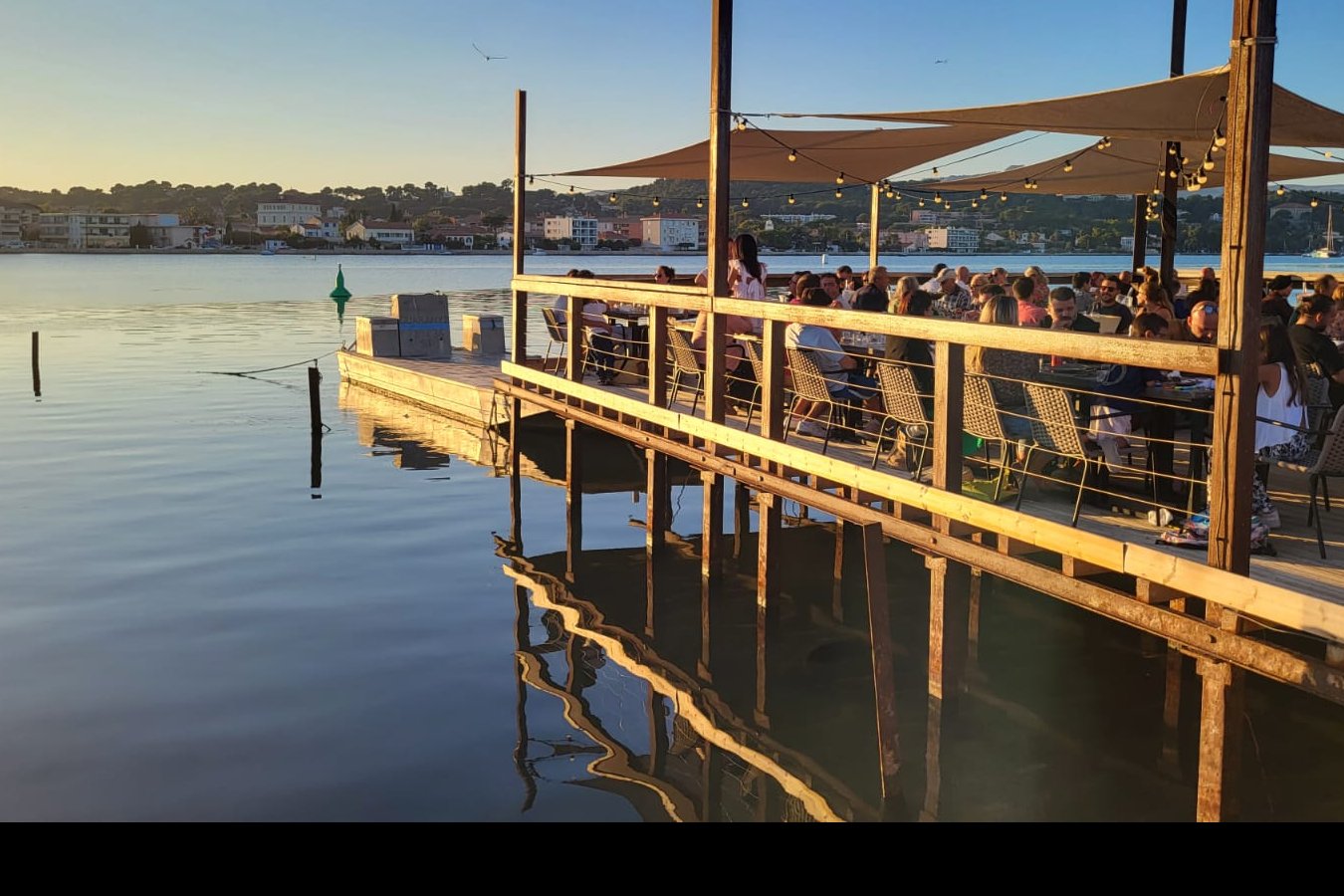
That is also why it works. Head for the entrance to the bay, on the allée de la Petite Mer, where the producers serve their tastings. In good weather, book a dinner table directly with the farm. If you're making a day of it, our walk through the murals of La Seyne's old center ends a short drive away.
From the tables on the allée de la Petite Mer, you can look straight out at the beds your lunch came from. Not many restaurants can offer that, which may be the point of not being one.