Toulon's market runs on two snacks most visitors walk past: a chickpea flatbread hot from the oven and a sugared doughnut from the fryer.
The story Toulon tells about cade starts in a lunch bag. According to the regional tourist board, the chickpea flatbread arrived nearly two hundred years ago in the musette of Genoese carpenters, came along with Napoleon's armies, and settled in Besagne, the old neighborhood around the market. Other accounts give the credit to Ligurian workers who came for the shipyards in the 19th century. The versions disagree on the details, but they all point across the water to Genoa, where chickpea flour has been baked into farinata for centuries.
We like ours thinner, crisp at the edges and not gooey in the middle.
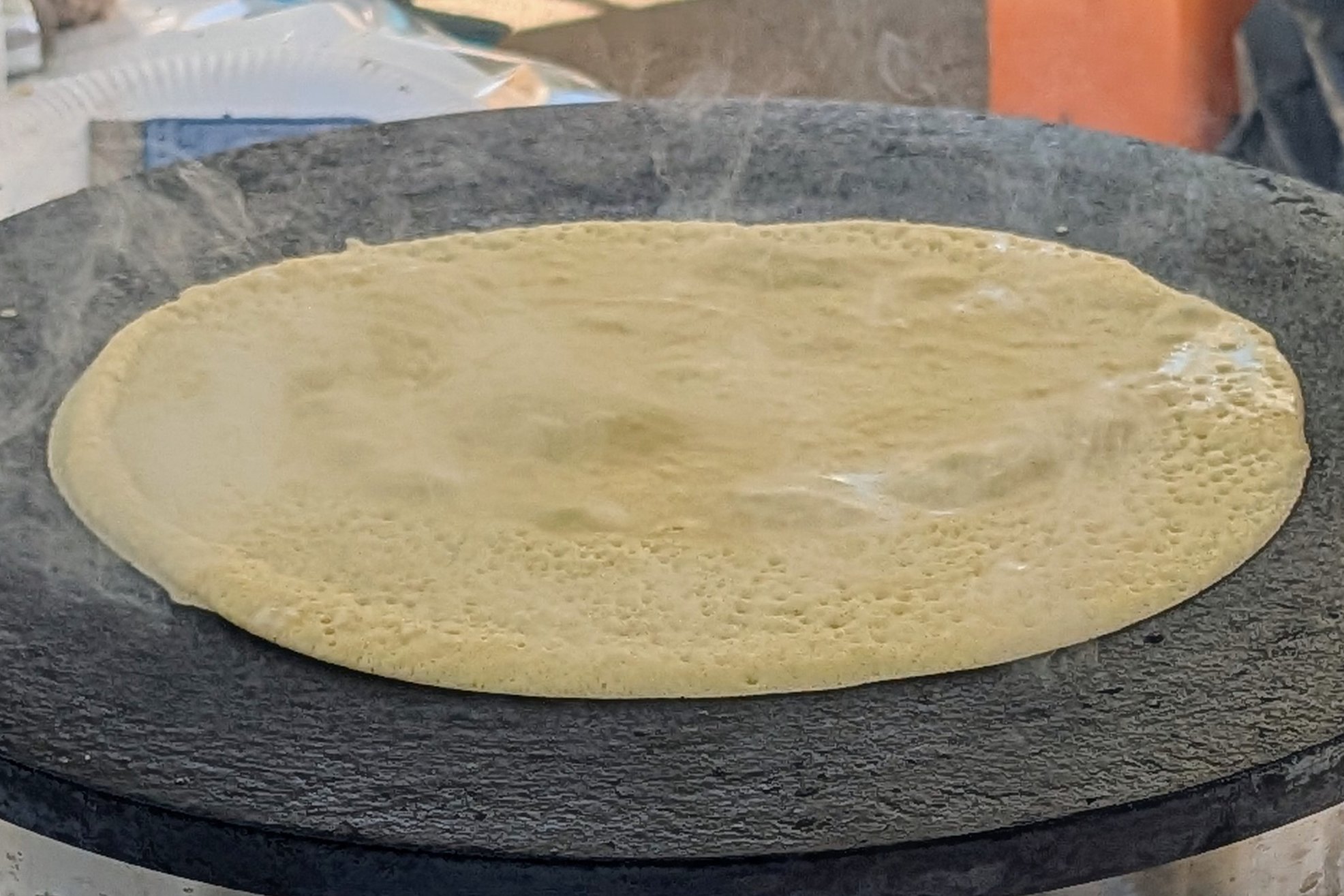
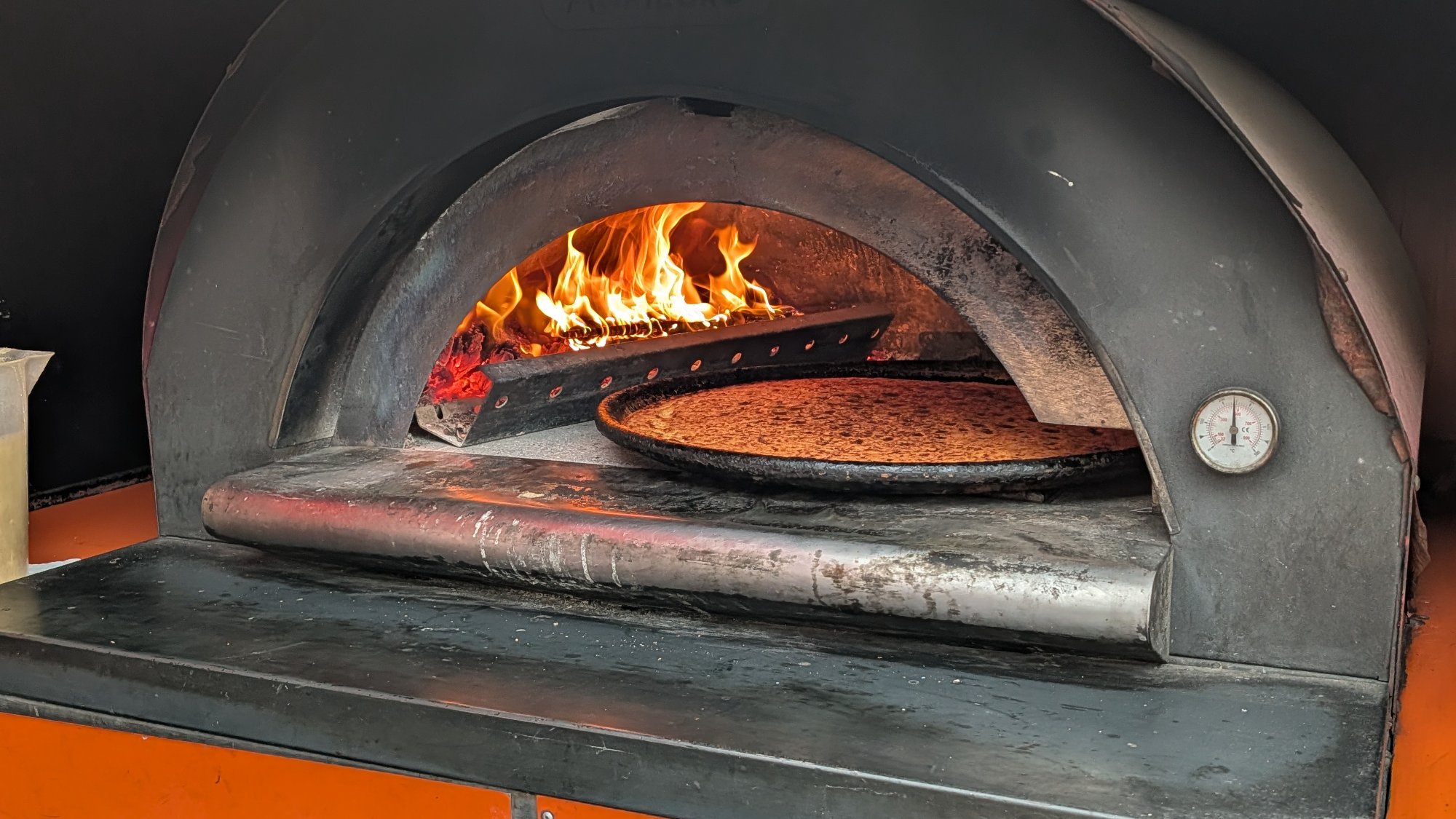
Cade itself is about as plain as food gets: chickpea flour, water, olive oil and salt, baked in a wood-fired oven and sold hot by the slice, usually with a grind of black pepper. The place to eat it is the market on Cours Lafayette. La Cade à Dédé has been selling from its carts since 1989, there and at the Mourillon market, and it takes cash only. Alongside the plain version you may find cade with anchovies, with olives, with cébettes (young spring onions), and a sweet one with figs.
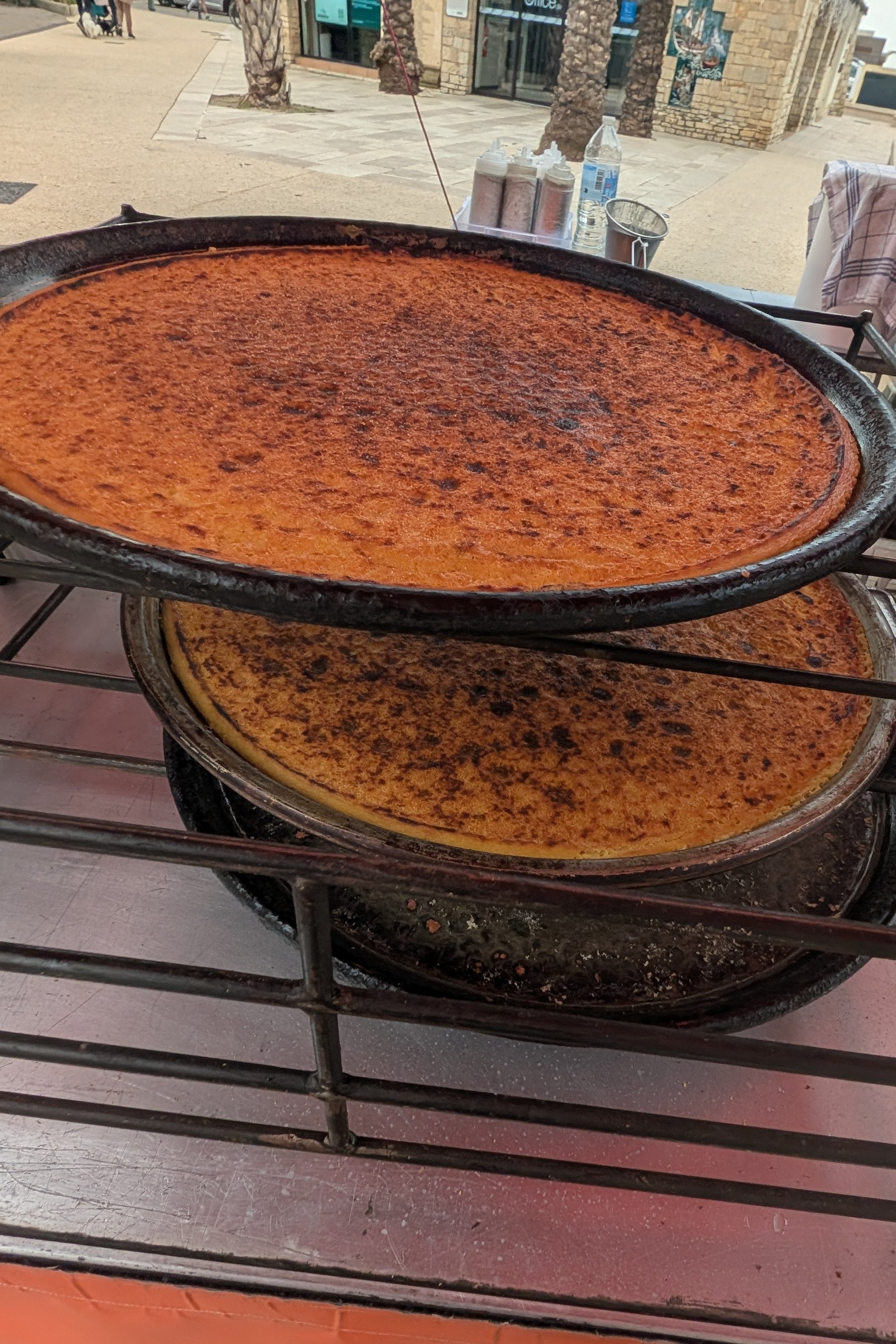
If cade sounds a lot like socca, that's because it is a close cousin. Socca is Nice's version: a thin batter poured into wide tinned-copper trays, often 50 to 70 centimeters across, baked in a wood oven and peppered generously. Cade is the slightly thicker of the two. Then there's panisse, from Marseille, made from the same chickpea flour but shaped into a thick log, cut into rounds and fried until crisp, then finished with salt or sugar. A Marseille fisherman summed up the difference for the magazine MyProvence: "Our panisses are fried, whereas in Nice they bake the socca." In the Var you can find all three. Socca turns up at the Friday market in Sanary-sur-Mer, between the olives and the tapenade.
Texture is where people take sides. The thickness changes from stall to stall, and some slices come out soft, almost custardy, in the middle. We like ours thinner, crisp at the edges and not gooey in the middle, so it's worth watching what comes out of the oven before you order.
Chichi frégi is the port snack with a sweet tooth, and it comes from the other direction, from Marseille. The city's tourist office dates it to the 1930s, when it caught on with workers in the tile works and factories of L'Estaque, the harbor district west of the city. The dough, made with wheat flour, chickpea flour and orange blossom water, goes into a vat of boiling oil, is cut into lengths of about 20 centimeters with big scissors, and gets rolled in sugar. The tourist office traces the name to an Italian word for chickpea, though not every recipe still uses chickpea flour. Three chichi stalls still work in L'Estaque.
In Toulon, chichis are a fixture of the Cours Lafayette market too. They're often compared to Spanish churros, only thicker and softer inside, and sometimes shaped into a ring rather than a stick. That makes the full market breakfast easy to plan: a slice of cade while it's hot, then a chichi for the walk back down toward the port.
Neither one was invented for visitors. They were food for people who worked in the yards and the factories by the water, and they still taste like it.