
Locals here don't complain about the wind. They plan around it, and most can tell you which one is blowing before they've even stepped outside.
The Var has more than one wind worth knowing about. The mistral gets all the attention, and fairly so, but the Levant and the Sirocco each leave their own mark on a visit, from a sudden gray sky to a fine layer of Saharan dust on the windshield. Provençal tradition even has a saying about how long the mistral lasts once it starts: always in multiples of three, three days, six days, nine, though anyone who's waited out a nine-day stretch will tell you the saying is more comfort than science.
You'll know which wind it is by the sky before you know it by name.
THE MISTRAL. This is the wind everyone means when they talk about "the wind" in Provence: a cold, dry current that funnels down the Rhône valley toward the Mediterranean whenever high pressure sits over the Bay of Biscay and low pressure forms around the Gulf of Genoa. The narrow valley acts like a nozzle, so the wind actually speeds up on its way south, arriving on the coast faster than it started inland. It can blow steadily for days, sometimes over 70 km/h, most often in winter and spring, and everyone from sailors to farmers has an opinion about it. It's also the reason Provence gets so many genuinely clear, blue-sky days, since it scrubs the air of haze and pollution on its way through, which is part of why the light here has such a reputation among painters going back a century or more. The tradeoff is that it dries out the vegetation fast, part of why summer fire risk spikes exactly when the wind is blowing hardest, and why you'll sometimes see roadside signs warning of high fire danger timed to a mistral forecast.
THE LEVANT. Where the mistral is dry and clear, the Levant is its damp opposite: a humid wind from the east, off the eastern Mediterranean, that squeezes through the mountain gaps along the coast and arrives gentle but persistent. It tends to bring cloud cover and rain rather than the mistral's sharp light, and when it blows hard it builds a heavy, rolling swell that sailors watch closely, since it can turn a calm morning at sea into something much less comfortable by afternoon. It shows up less often than the mistral, but anyone who's had a gray, still, slightly sticky day in the Var without an obvious storm front has probably felt it without knowing its name.
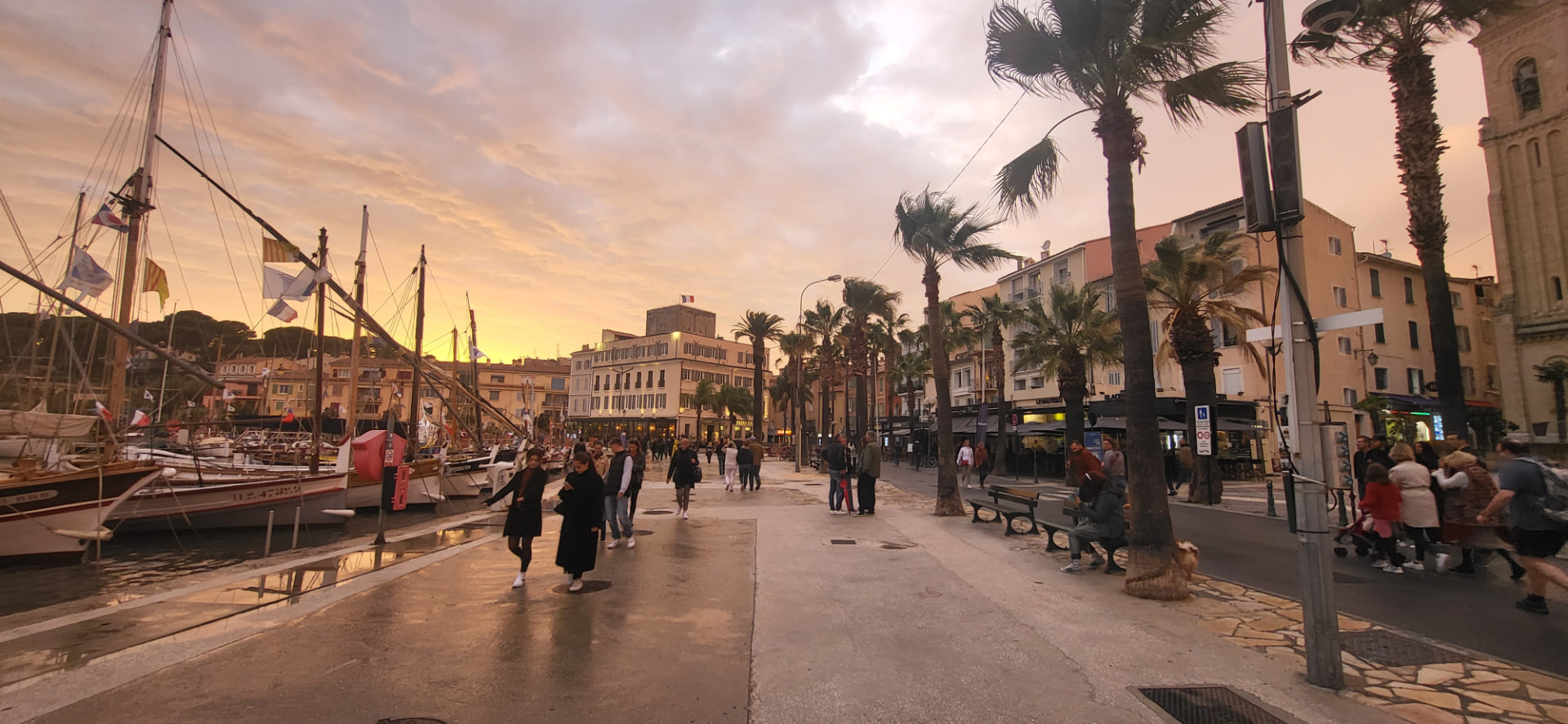
THE SIROCCO. This one arrives from further afield, a hot southeasterly wind that picks up heat and, sometimes, fine reddish dust crossing the Sahara before it reaches the French coast. Unlike the Mistral's multi-day runs, the Sirocco in France usually blows for a matter of hours rather than days, most common in autumn and spring and peaking around March and November. You'll know it by the color as much as the temperature, a slightly hazy, warm-toned sky, and sometimes a dusting on the car the next morning that no amount of rain quite explains. It's the wind least talked about of the three, mostly because it passes quickly, but it leaves the most visible evidence behind.
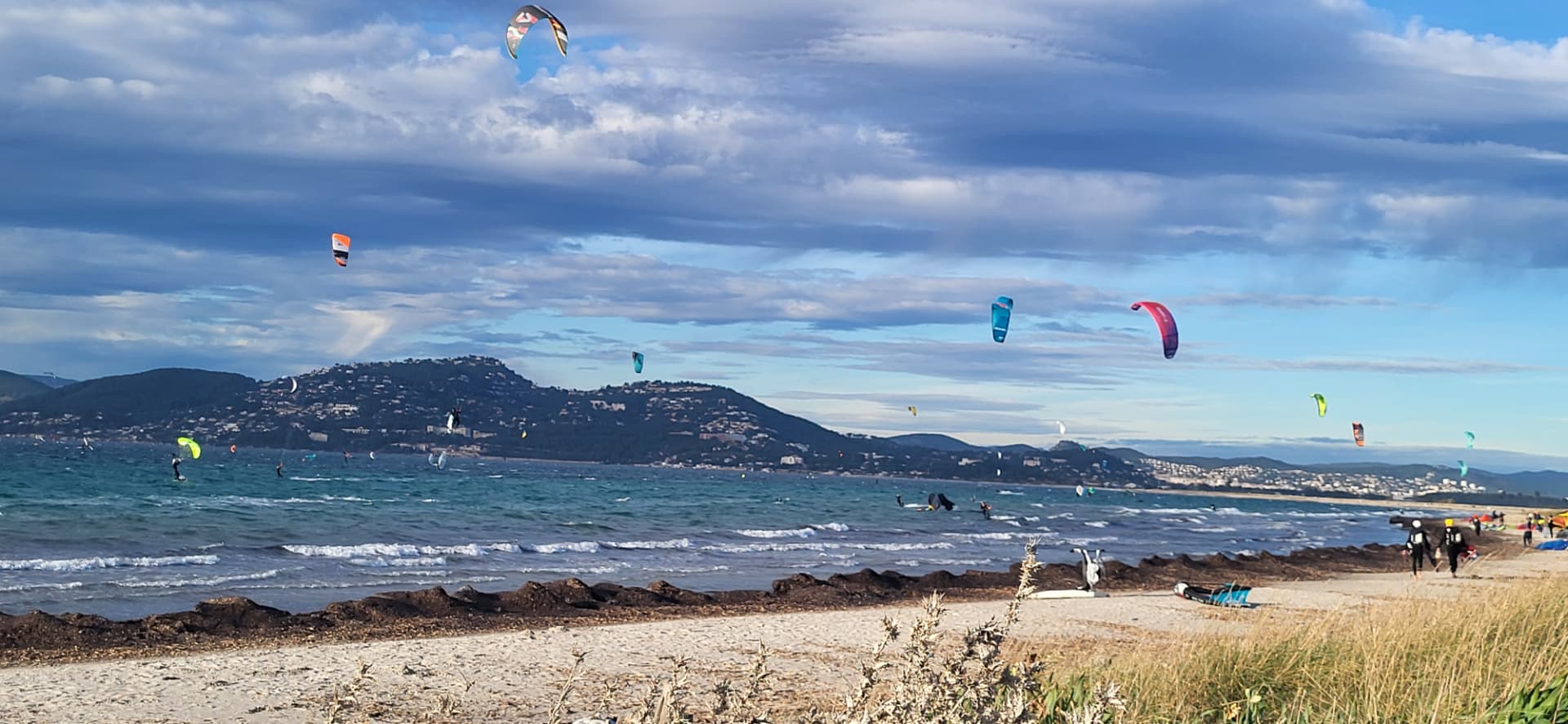
A rough way to tell them apart without checking a forecast: a sharp, clean sky and a steady wind out of the north is the mistral. A gray, damp, gently overcast day that rolled in from the sea is probably the Levant. A warm, hazy day with reddish dust turning up somewhere it shouldn't is the Sirocco. For sailors, all three matter, but the Mistral in particular is part of what makes the waters off Saint-Tropez during Les Voiles so lively to watch from shore, challenging for a beginner and genuinely thrilling for anyone with more experience. Hyères, further along the coast, has built something of a reputation as a kitesurfing destination for exactly this reason, steady, reliable wind that windsurfers and kitesurfers plan entire trips around.
Wind should decide where you swim, too. Almanarre, on the Giens peninsula, is at its best on a Levant day, calm enough to actually enjoy, unless you're a kitesurfer, in which case a Mistral day is the one you're hoping for. Either way, worth checking which wind is forecast before picking a beach rather than after you've already driven there.
The mistral has its own folklore beyond the three-six-nine rule, too. It's the wind blamed, half-jokingly, for making people a little unhinged after a few days straight of it. It's also the reason so many bell towers across the Var are topped with an open wrought-iron cage, a campanile, instead of a solid stone spire, less surface for the wind to grab onto. That wasn't the only reason villages built them that way, a campanile was also simply cheaper than a stone tower, but the wind story is the one that survives at the dinner table.