
Everyone knows Normandy. Almost no one asks about the other landing, the one that happened here, in the Var, ten weeks later.
On the night of August 14-15, 1944, Allied forces landed along the Var coast in Operation Dragoon, the Débarquement de Provence, aiming to secure the Mediterranean's vital ports and open a second front to pressure German forces already stretched thin after Normandy. The landing split across three beach sectors that are almost all familiar names to anyone who spends a summer here: Alpha Beach around Cavalaire, La Croix-Valmer, and the Pampelonne and Ramatuelle shoreline, Camel Beach covering Fréjus, Saint-Raphaël, Le Dramont, and Agay, and Delta Beach at Sainte-Maxime's Nartelle beach. Beaches most visitors know today for sunbathing and paddleboards were, eighty years ago, landing zones for tens of thousands of troops in a single night.
You can spend a whole summer in the Var without knowing any of this happened here. One trip up Mont Faron changes that.
The force itself is a bigger, more complicated story than it's usually given credit for. The initial assault came from the US Seventh Army's VI Corps under Major General Lucian Truscott, followed by General Jean de Lattre de Tassigny's Army B, some 250,000 troops made up of Free French forces, French settlers from North Africa, and, in the majority, soldiers from France's North African colonies: Moroccan goumiers, Algerian and Tunisian tirailleurs, and Senegalese tirailleurs. It's a chapter of the liberation of France that doesn't get told nearly as often as it deserves, and a reminder that the force that freed this coast looked far more diverse than the Normandy story usually suggests.
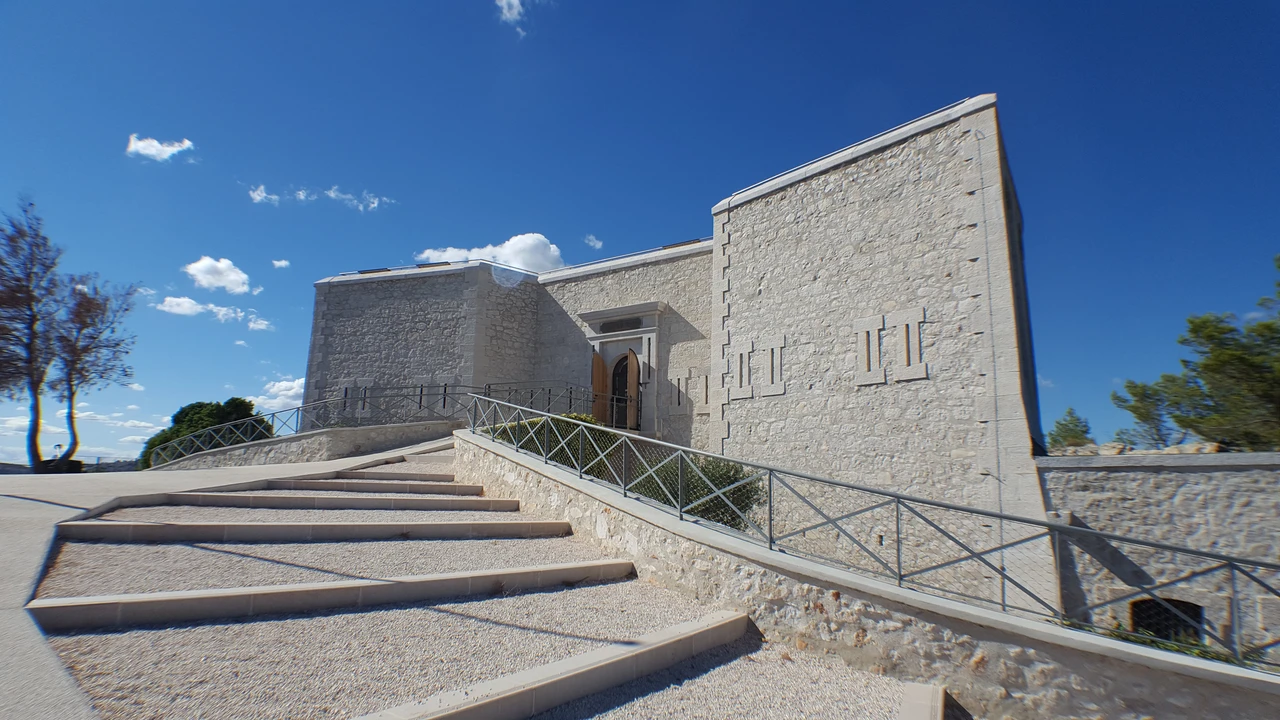
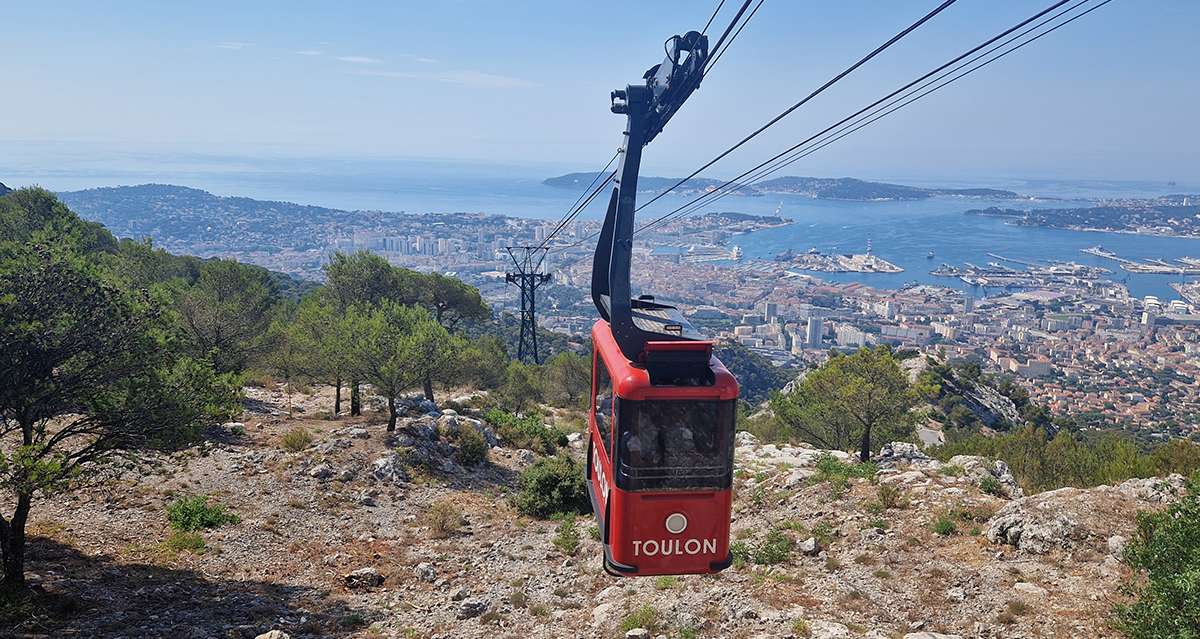
The place to actually understand all of this is the Mémorial du Débarquement et de la Libération en Provence, set inside the 19th-century Beaumont tower at the summit of Mont Faron above Toulon. It's reachable by cable car, a good outing in itself with the whole bay opening up below as the car climbs, or by car via a winding road up the mountain for anyone who'd rather skip the ride. Inaugurated by de Gaulle in 1964 and renovated in 2015-2017, the museum's 600 square meters trace the landing through to the liberation of Toulon and Marseille on August 28. The collection of period objects, testimony, and archive video is substantial, and a meaningful share of it is presented in English, rare for a regional history site, and a real reason to recommend it to non-French-speaking visitors who might otherwise skip a military history museum assuming the language would be a barrier.
A few places worth pairing with the visit. In Le Lavandou, a plaque on the cliffs of Cap Nègre marks where the Africa Commandos, the first Allied troops ashore, scaled the rocks just after midnight, working entirely by feel and moonlight ahead of the main landing. In Le Muy, the small Musée de la Libération adds a village-level view of the same events, fitting since La Motte, nearby, is generally credited as the first village liberated in Provence that August, commemorated today by the Mémorial du Mitan at the entrance to a local golf course, an unexpected setting for a piece of history this significant. And on the bay at Cavalaire-sur-Mer, part of the Alpha sector above, a Landing Monument faces the water where it all started, easy to walk past without noticing unless you already know to look.