
Ask someone where modern scuba diving was invented and they'll probably guess somewhere tropical. The regulator that made it possible was actually engineered in Paris, at the gas company Air Liquide, by an engineer named Émile Gagnan. But it was tested and proven here, off a small fishing port in the Var, which is really the better claim to make: this is where scuba diving became scuba diving.
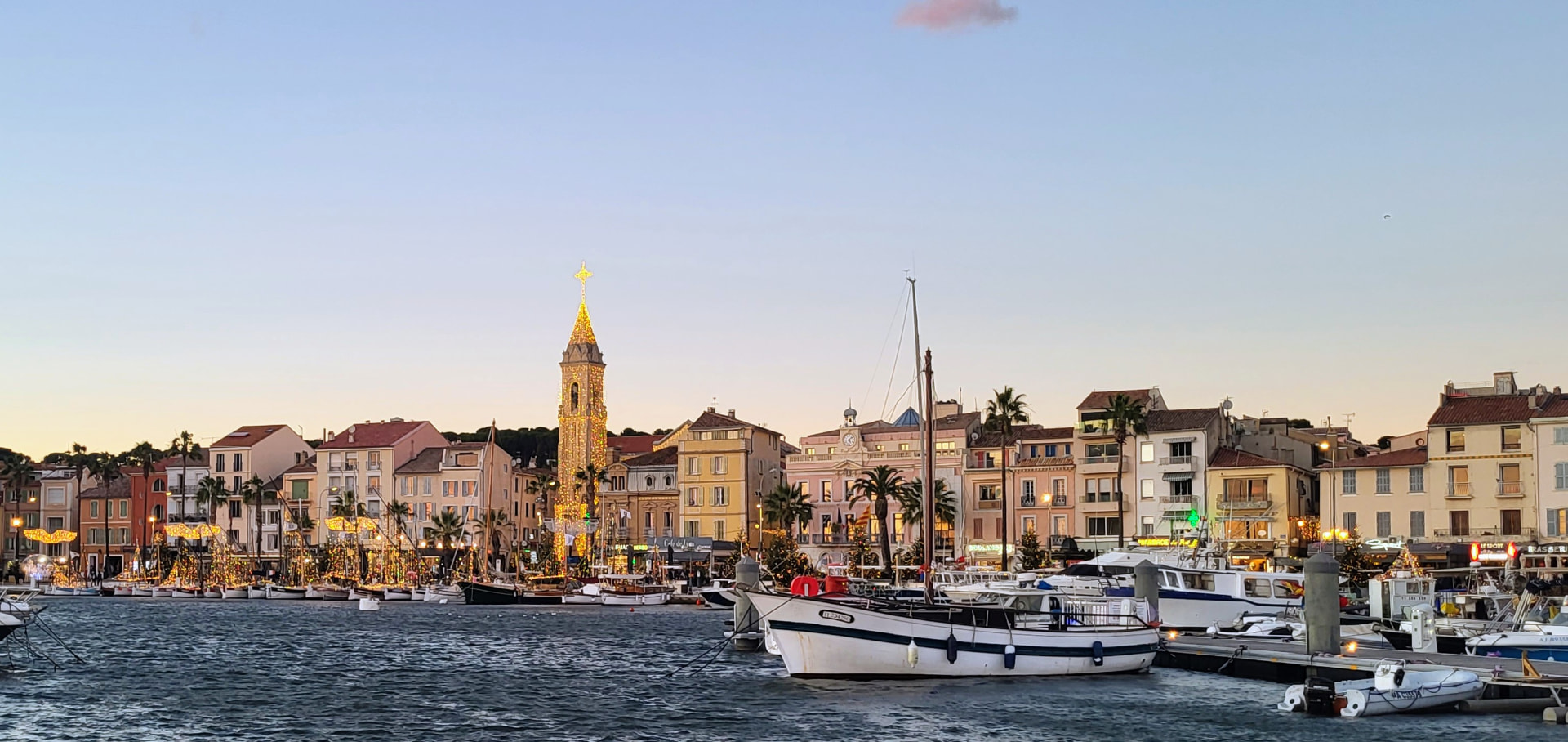
Sanary-sur-Mer still looks the part: pointus, the region's traditional small wooden boats, painted in bright colors and lined up along the quay, and a market that spills out along the waterfront under the plane trees most mornings, fish and produce and flowers all within a few stalls of each other, the kind of market that's still genuinely for the people who live here rather than staged for a photo. Locals will also tell you it's the biggest and best market in the Var, and the most crowded, arrive early if you'd rather move through it than stand still in it. Come back in December and the same waterfront strings up lights for the season, quieter and colder, but arguably just as worth seeing.
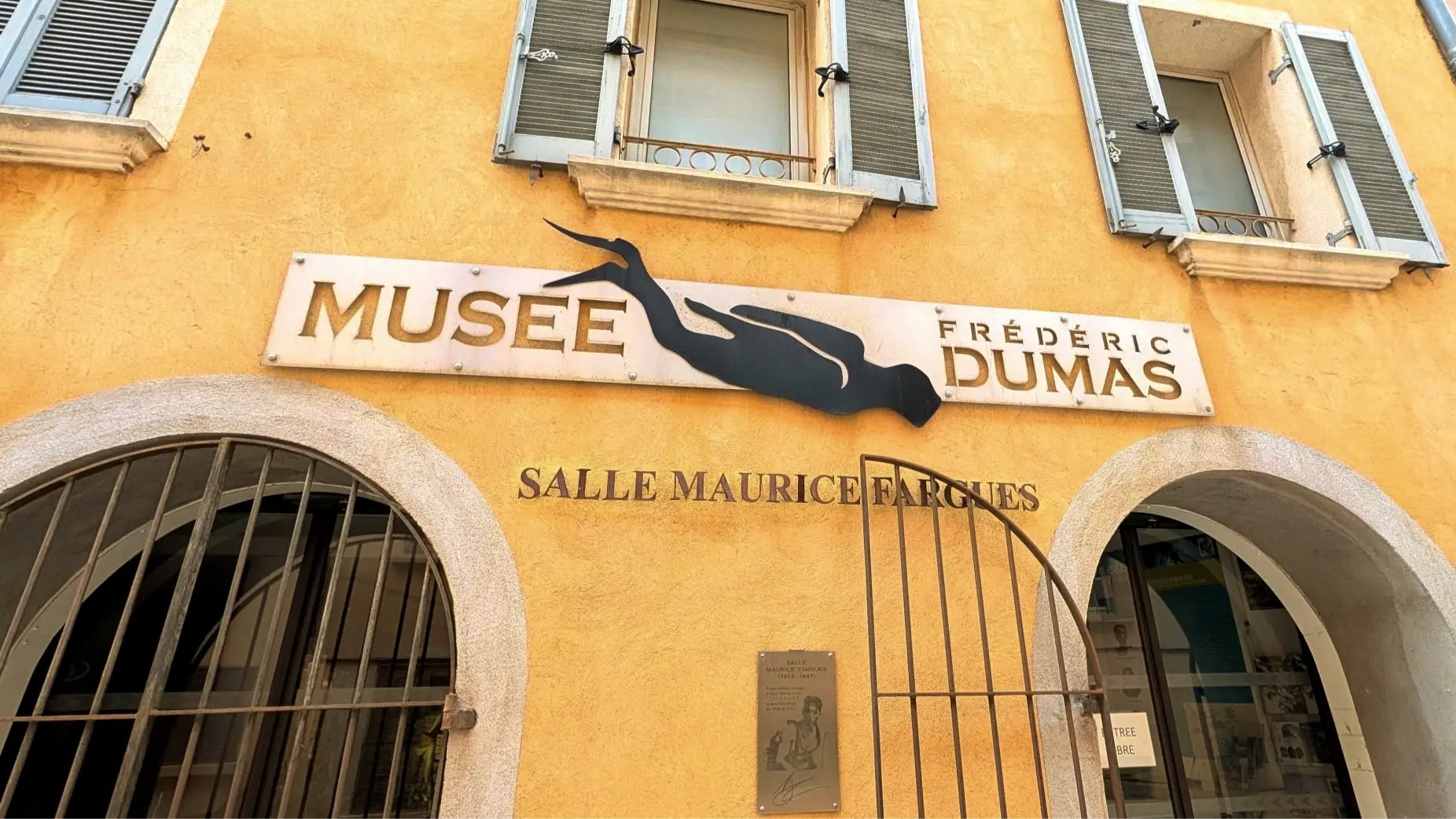
At the end of the jetty, the ochre Tour Romane houses the Musée Frédéric-Dumas, named for the Sanary-born diver who worked alongside Jacques Cousteau and Philippe Tailliez in these same waters in the early 1940s, when the three of them first tested Gagnan's regulator in open water. Locals still refer to them as the Three Musketeers of the deep, and the experiments they ran off this coast effectively invented diving as something more than holding your breath. It wasn't a laboratory or a naval base where this happened either, it was this stretch of ordinary Var coastline, three friends with an idea and a lot of patience. The museum itself is small, easy to fold into an hour by the water, but the history it holds is genuinely outsized for the building's footprint. Curious to go deeper once you're home, Jacques Cousteau's Ocean Tales is streaming on Netflix and makes a decent plane-ride rabbit hole.
From the Sept Croix above town, the whole bay opens up in one view, worth the short climb even for anyone not planning to stay long.
Offshore, the island archipelago of Les Embiez is close enough for an afternoon trip, a short boat ride from the small port of Le Brusc. The islands were worked for salt by monks as far back as the Middle Ages, then largely left alone until 1958, when Paul Ricard, the Marseille pastis magnate, bought the largest island and spent the 1960s turning it into a family retreat of pine forest, vineyards, and scrubland, open to the public rather than kept private, which was very much the point for him. He founded an Oceanographic Institute there in 1966, a nod to his own fascination with the sea that mirrors Sanary's diving history back on the mainland, and the island still grows its own wine today under his family's name.
Sanary's own history runs deeper than diving, too. In the 1930s the town became an unlikely refuge for German and Austrian writers and artists fleeing the rise of the Nazi regime, among them Thomas Mann's family for a period, drawn by the light and the low cost of living at the time. It's a quieter thread of the town's past, rarely mentioned alongside the diving story, but it says something about how many different reasons people have found to wash up here over the decades.
Go in the late afternoon if you want the photo everyone takes here. The light on the boats and the pink bell tower of Saint-Nazaire is unbeatable that time of day, softer and warmer than the flat light of midday. Sanary also sits close enough to Bandol and La Cadière-d'Azur to fold into the same day if wine is on the agenda, the vineyards of one running almost into the outskirts of the other.
A port town that gave the world a way to breathe underwater deserves more than a drive-through.