
There's a peninsula in the Var connected to the mainland by two roads made entirely of sand.
The Presqu'île de Giens, just south of Hyères, is joined to the coast by a double tombolo: two narrow sand bridges, each about four kilometers long, built up by the sea over millennia and still shifting slightly with every storm. It's one of the more unusual pieces of coastline on the whole Mediterranean, and the kind of geography that's genuinely rare enough to have earned the area Grand Site de France recognition, a label reserved for landscapes considered exceptional enough to need real protection from overuse.
Most people drive past on the way to Porquerolles and never realize what they're driving across.
Between the two tombolos sit the old salins, salt pans that produced up to 30,000 tons of salt a year until production stopped in 1995. They're not worked anymore, but they didn't go quiet. The marshland is now a refuge for more than a hundred species of migratory birds, flamingos among them, and the pans themselves take on a pink-tinged color in certain light, from the salt-tolerant algae that thrive in the shallow water, that photographs even better than the beaches do. Birdwatchers come specifically for this stretch, and even without binoculars it's worth slowing down to look.
The peninsula holds two small settlements worth knowing. Giens itself sits up on the higher ground at the peninsula's tip, with the remains of an old fort and views that stretch to Porquerolles on a clear day. La Madrague, down at sea level, is a working little port and the departure point for ferries to Porquerolles, so anyone heading to the island for the day is already passing through without necessarily realizing what they're driving across to get there.
The two roads out to the peninsula give a genuine choice. The eastern side faces open sea and bigger waves, better for anyone who wants real surf under them, and windsurfers and kitesurfers make good use of it when the conditions cooperate, Almanarre in particular has built a real reputation as one of the best kitesurfing spots in the whole Var. The western side, sheltered by the salt pans, is calmer and better for families with small children who'd rather wade than fight a current. Cycling between the two, with the pans on either side and birds working the shallows, is one of the better easy rides in the Var, flat and short enough for an afternoon without much planning required.
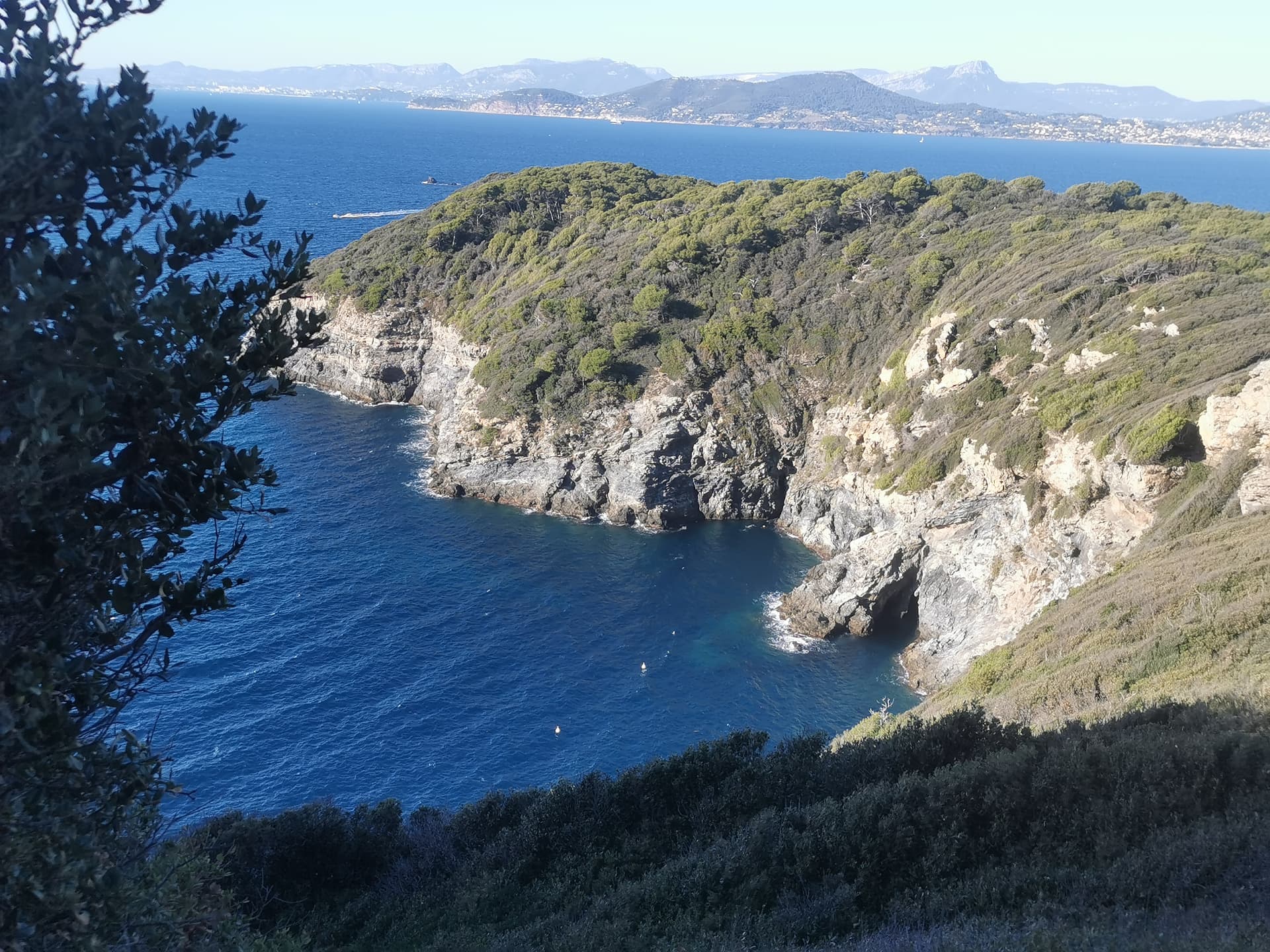
For a longer look, a coastal hiking trail follows the western tombolo too, part of the Sentier du Littoral, running from the Plage des Darbousières down to La Madrague. Walk it in that direction, west to east, to get the harder, more exposed stretch out of the way while you're still fresh. The second half turns almost surreal, a stretch worth calling the magic forest, wind-twisted trees that look like they belong to something out of a fairy tale. The trail keeps changing the whole way, cliffs, scrub, the odd hidden cove, and it ends near the peninsula's western tip at the old Batterie de la Pointe des Salis, a WWII-era gun battery that also stood in for the island of Monte Cristo in the 2024 film, a good excuse for a picnic with a view no matter the weather. Along the way, past Darbousières, a sign marks the edge of the Pelagos Sanctuary, the protected marine area for whales and dolphins that stretches from here all the way to the Italian coast.
Hyères itself, just north, makes a natural base for exploring the peninsula without needing to find accommodation right on the sand, and it comes with its own old town worth a wander if you're staying more than a day. The town has long carried a reputation as something of a palm tree capital, its microclimate mild enough that exotic gardens and palm nurseries took root here well over a century ago, a softness in the air that extends right out to the tip of the peninsula itself. Parking near the tombolo fills quickly by mid-morning in summer regardless, so going early, or arriving by bike from Hyères, avoids most of the crowd and the circling for a spot.
For most visitors, Giens is simply the last stretch of road before the Porquerolles ferry, a place to park and forget about until the return trip. It's worth building in even an hour before or after the crossing, since the peninsula rewards exactly the kind of unhurried look that a ferry schedule doesn't usually allow.