
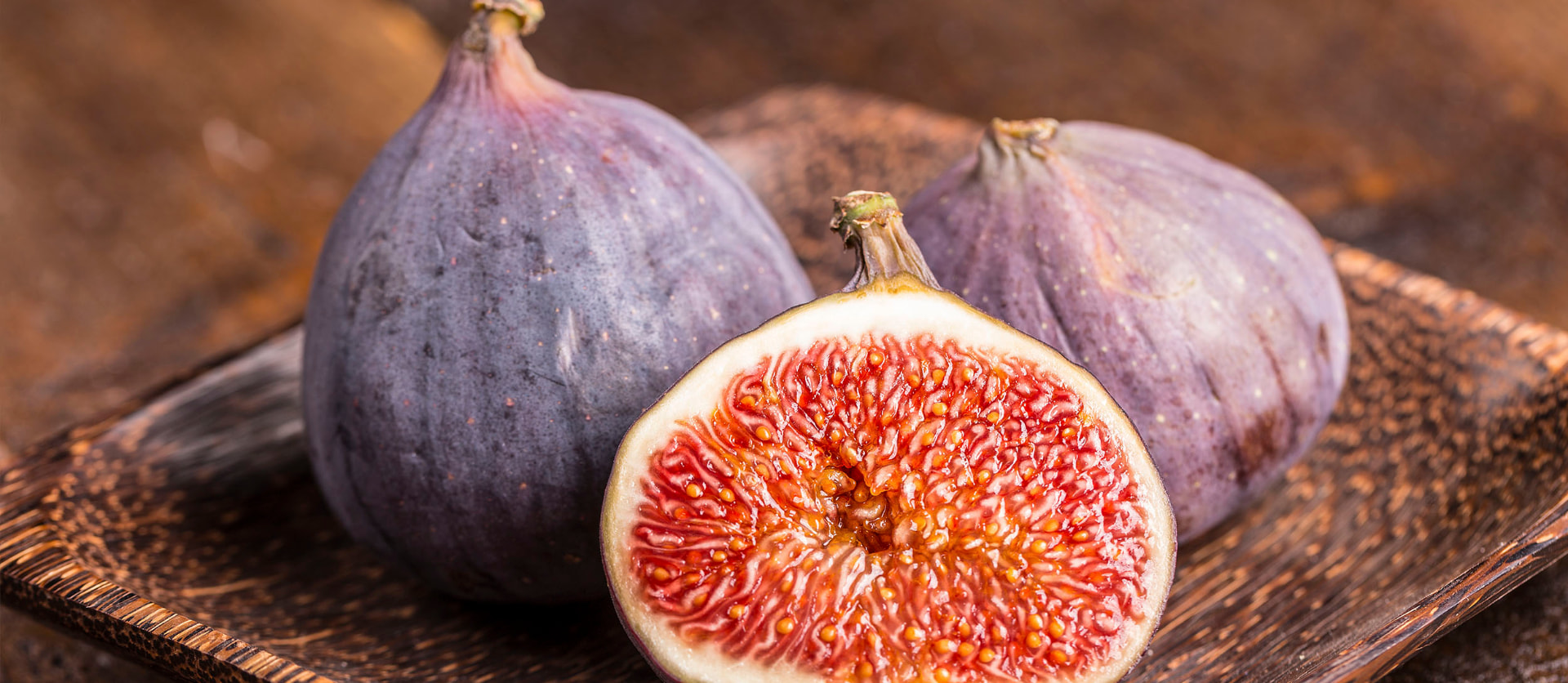
There's a fig variety with AOP protection reserved for a small stretch of villages, and every one of them is in the Var.
The Violette de Solliès grows in a demarcated zone of fifteen communes around Solliès-Pont, in the Gapeau valley, where the soil is rich in pebbles and silt and drains exactly the way a fig tree wants it to, and where the surrounding hills shelter the orchards from the worst of the mistral. Figs have grown here since the Middle Ages, and the variety we know today took shape commercially through the 19th century, dark-skinned and dense, with a deeper sweetness than the paler, greener varieties grown elsewhere in France. Compared to a common green fig, the Violette de Solliès holds its shape better and carries more sugar, which is part of why it travels and sells so well beyond the region.
A fig this good doesn't need a recipe. It needs a market day and a knife.
By the 1990s the sector was struggling, aging growers, land pressure, cheaper imports, until AOP status in 2006 gave it the protection and recognition it needed to hold on. Now it's one of the Var's genuine culinary points of pride, the kind of thing a grower will tell you about unprompted at the market, and a rare example of a regional food product that was actively rescued rather than simply inherited.
Harvest runs from mid-August into September, sometimes later, which makes it one of the last big fruit moments of the Var summer, arriving just as the tourist season starts to thin out. Look for figs that give slightly to a gentle press and have a small split or "tear" at the base. That's ripeness, not damage, and a fig without that small crack is often one picked too early to ship. Beyond eating them straight off the stand, they pair well with a local goat cheese, wrapped simply in a slice of ham, or baked into an open tart with almost nothing else added, the fig doesn't need much help. A drizzle of local honey over a few halved figs and a handful of walnuts makes a five-minute dessert that outperforms most things that take longer. Dried, or turned into jam, they carry the season past September for anyone who wants a jar of it at Christmas, when fresh ones are long gone.
You'll find them at village markets across the growing zone through the season, and they show up in local desserts too, including the buckwheat-and-fig Kermoco cake from Toulon, a pairing that makes more sense once you've tasted how well fig and something slightly earthy work together. At the aperitif hour, a few figs alongside a plate of local charcuterie do the same job a melon usually gets asked to do, and do it better.
AOP status isn't just a label growers get to slap on the box either. It comes with real inspection, checks on where the trees are planted, how they're pruned, and how the fruit is picked and graded, all meant to keep the designation meaning something rather than becoming decorative. That oversight is part of why the variety survived its rough patch in the 1990s rather than fading out like so many small regional crops have elsewhere in France.