
Town / Village
Six-Fours-les-Plages
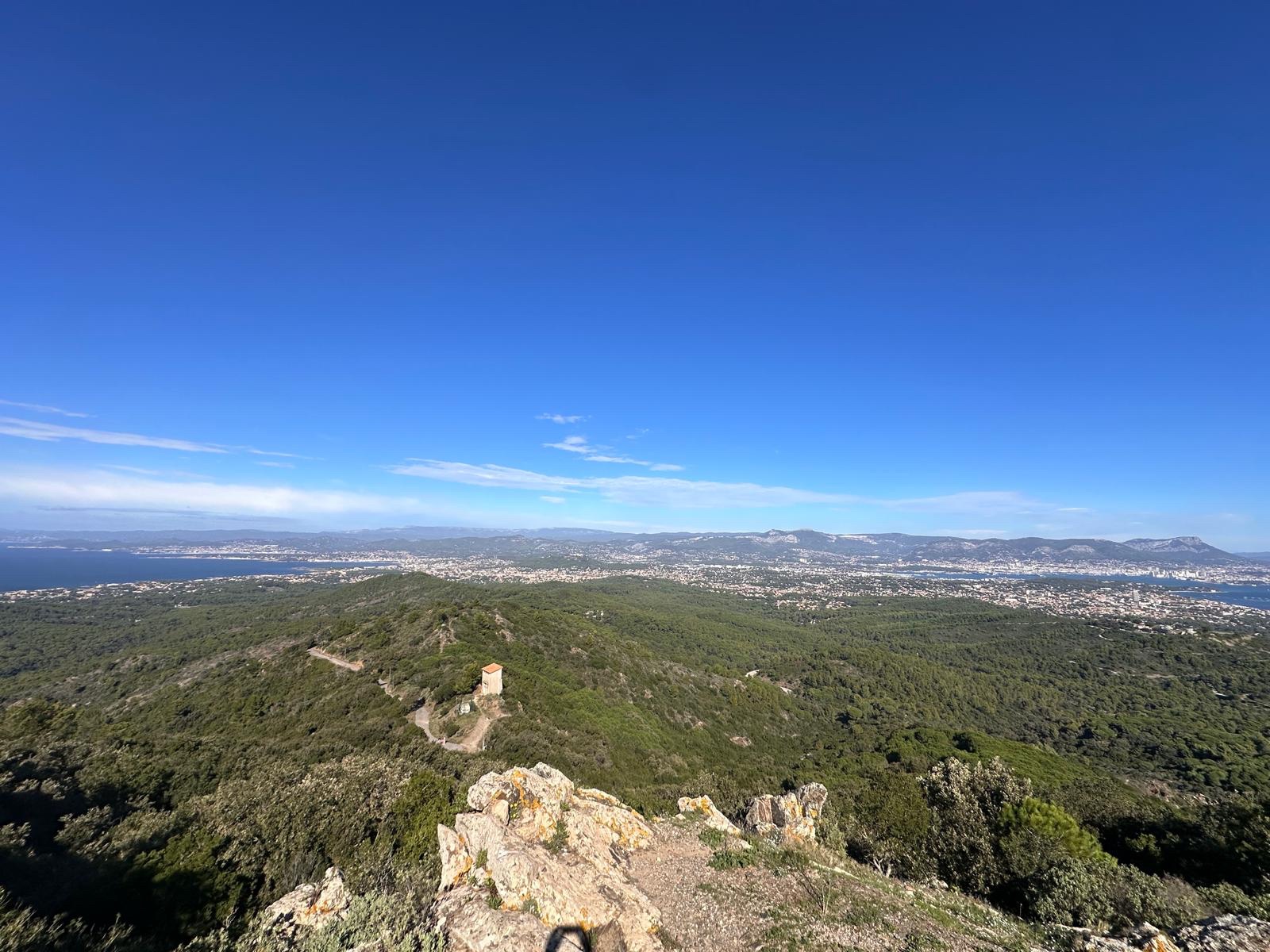
Open in MapsIn the 1870s the French Navy took over an entire village and knocked it down. Old Six-Fours stood on a hill about 210 meters above the sea, a walled refuge where people had climbed for safety for centuries. The Navy wanted the summit to guard the Toulon harbor, so the houses came down and from 1875 a fort went up in their place. One building was spared: the church. The Collégiale Saint-Pierre still sits right beside the fort's walls, and it is the only piece of the old village left standing.
Today's town lives down on the plain and along the water, which is where the "les-Plages" in the name comes from. The older part of the name is said to come from the Latin Sex Furni or Sex Fortis, six forts or fortified posts. Six-Fours is the town immediately west of La Seyne and Toulon, with about 37,000 residents, and its coastline is the reason most visitors come.
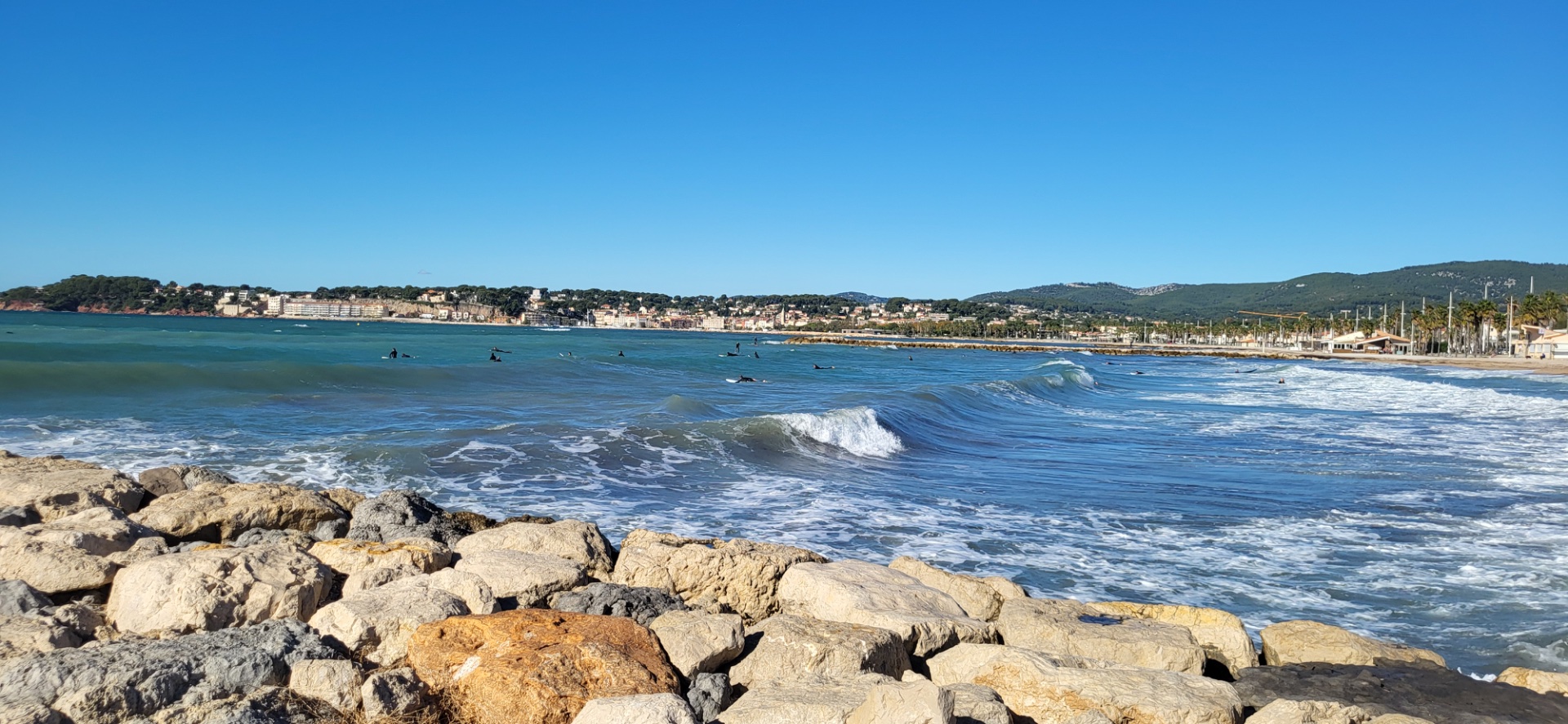
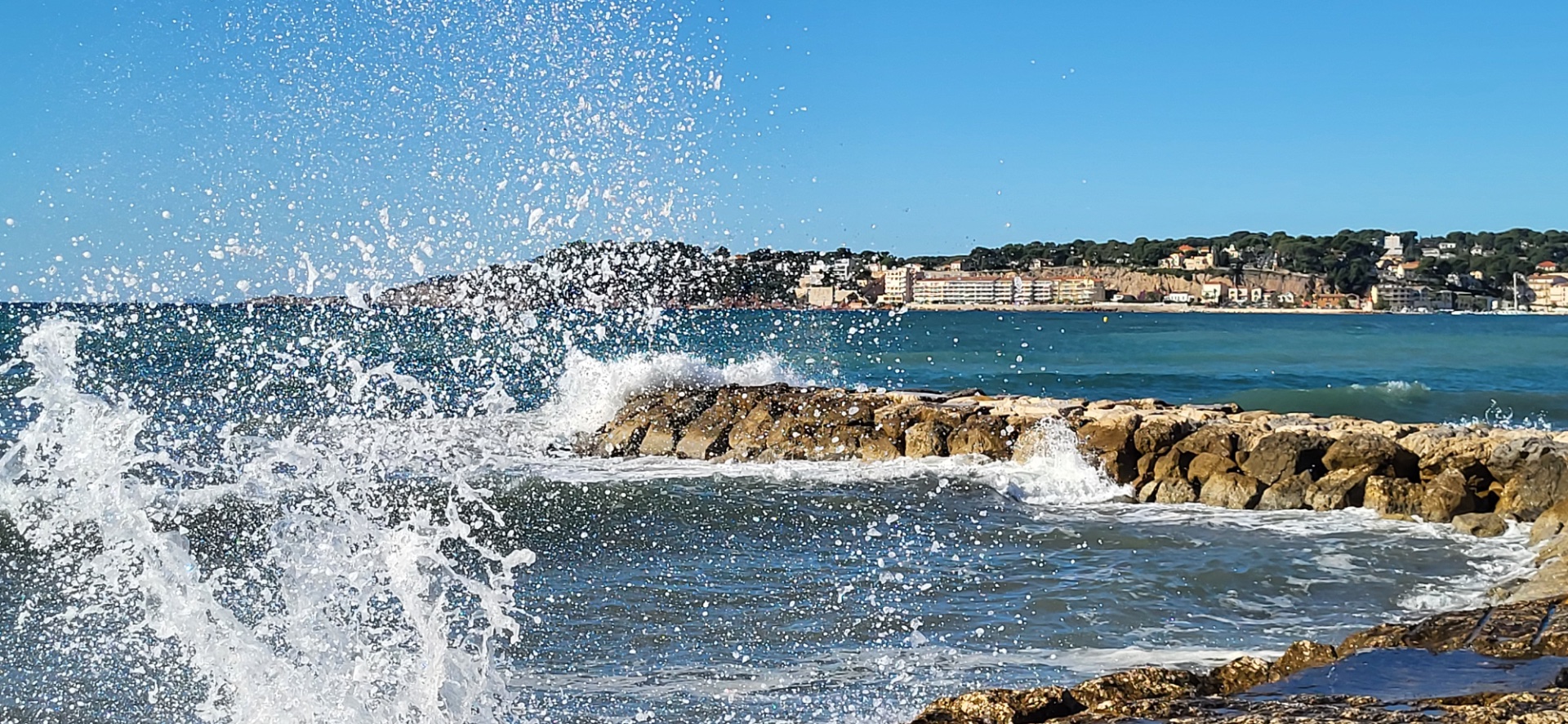
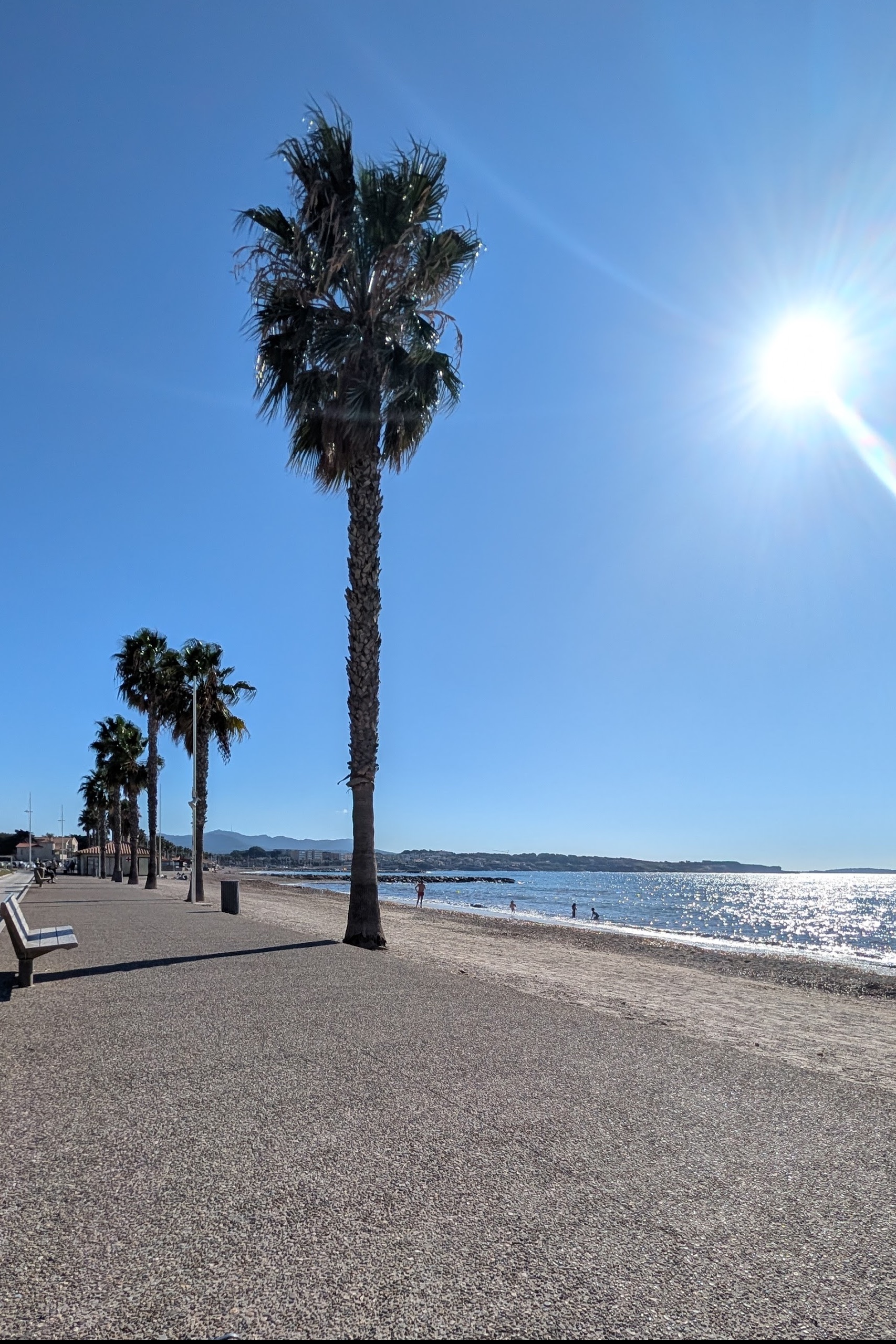
Start with the beaches, because there are plenty of them. The longest is Bonnegrâce, a pebble beach of about 1.2 km along the Promenade Charles de Gaulle, with lifeguards from May through September. Its end near La Coudoulière has a nickname: Brutal Beach. When the mistral blows, it pushes waves onto this stretch, and surfers and windsurfers come out for them. Surfing in the Mediterranean depends on the wind, so watch the forecast and come on a mistral day. Local surfers say the best waves come once a hard mistral starts to ease, breaking over sand near the jetty at the east end, and that the waves are friendly for most levels. Expect a crowd of sails when the wind is up.
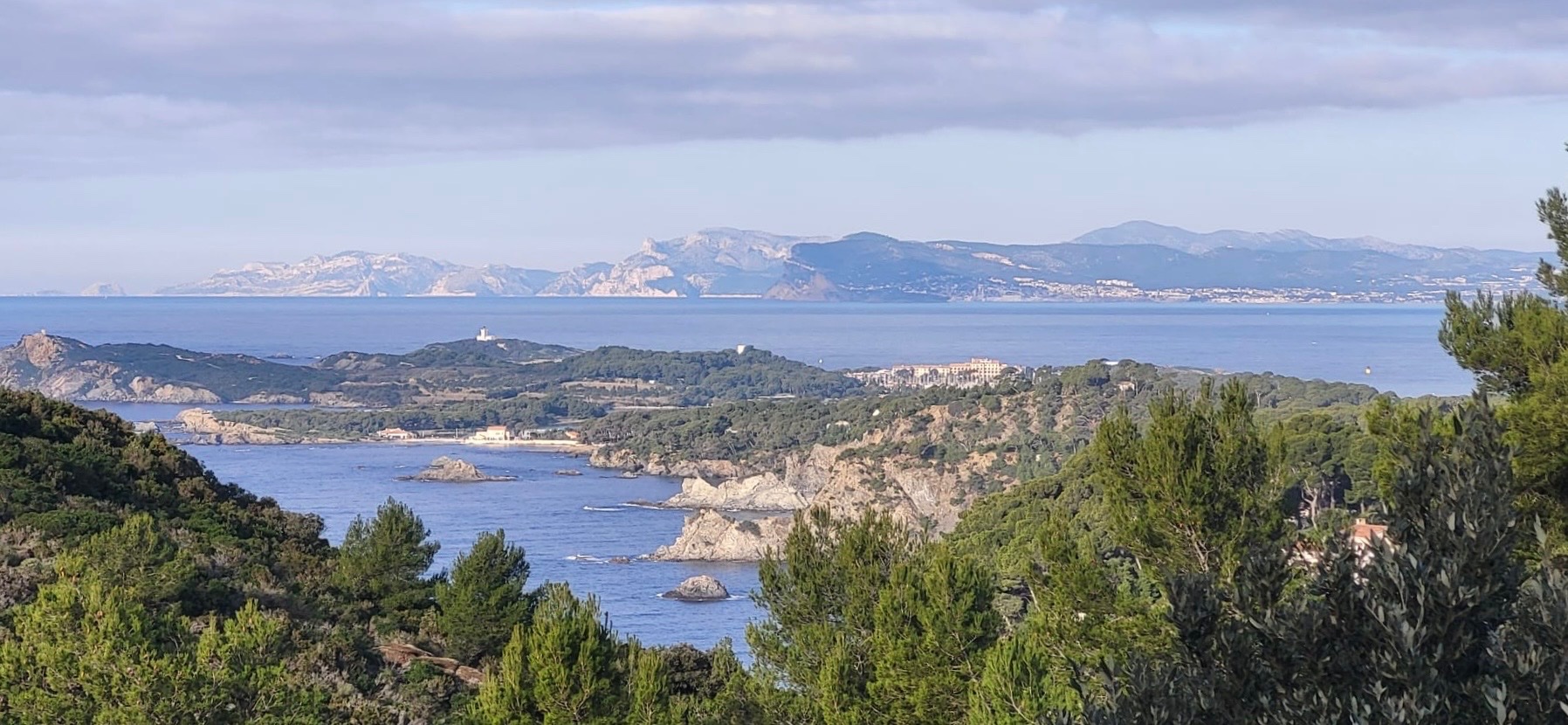
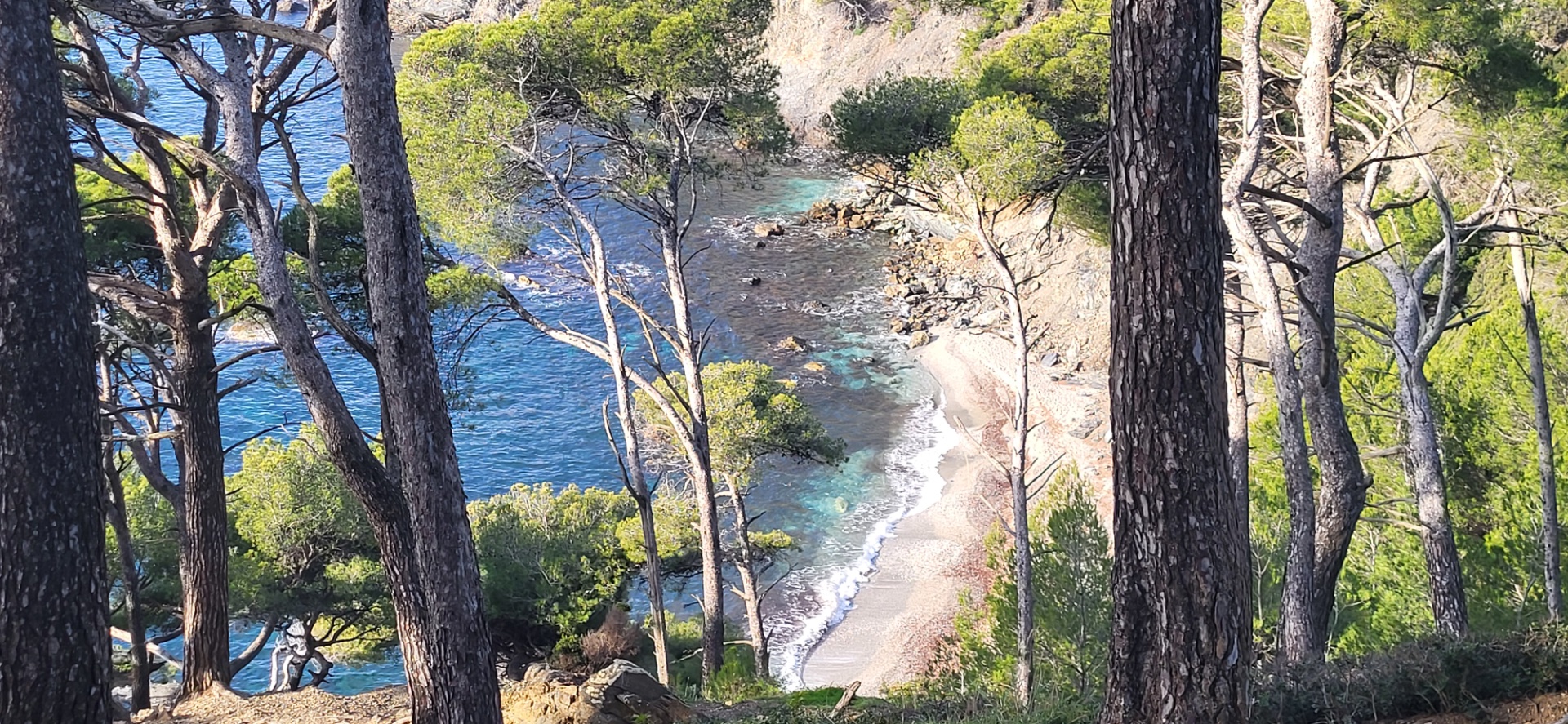
Follow the coast and the beaches keep coming. La Coudoulière and Les Roches Brunes are small and sandy, and Les Roches Brunes has a sailing center and a windsurf spot. Around Cap Nègre the shore turns into little coves with turquoise water, reached by a path. The cape is dark for a reason: its rock is the end of an old lava flow that starts inland at Évenos. Then come Le Rayolet, Le Cros and Les Charmettes, a pretty sandy beach between two points that looks straight out at the Embiez. Past Le Brusc, toward Cap Sicié, Le Mourret and La Fosse are wilder and quieter, and La Fosse, with its dark sand, takes a walk of about 2.5 km from the Le Brusc parking.
Le Brusc is the town's old fishing port, and it is where Six-Fours heads out to sea. The Île du Gaou, the two little islands you reach by footbridge, belongs to Six-Fours, and so does the Embiez archipelago, a ferry ride of about 12 minutes from the port. The Embiez is home to the Institut océanographique Paul Ricard, founded in 1966 by the pastis maker Paul Ricard and the doctor and biologist Alain Bombard, with a public aquarium. Bombard was already famous: in 1952 he crossed the Atlantic alone in a small inflatable boat to prove a castaway could survive at sea. On the smallest island of the group, the Grand Rouveau, a 17-meter lighthouse has been working since 1861. It no longer has a keeper.
Back up the hill, the Collégiale Saint-Pierre is worth the drive. The Romanesque part dates to the 11th century and is built of gray-blue stone from Évenos, and a Gothic extension was added in 1608. Inside are around fifteen paintings, including a polyptych attributed to Louis Bréa. From the terrace you see over the Toulon harbor to the Embiez. The fort next door is still a military site, closed to visitors, and photos of it are not allowed. Inland, Notre-Dame-de-Pépiole is even older. This small chapel of three naves in pink, yellow and gray stone is thought to date from around the 5th or 6th century, which would make it one of the oldest Christian buildings still standing in France. It sits among pines, olive trees and cypresses, and a Benedictine monk restored it in 1956.
Six-Fours has had some well-known neighbors. The sculptor Paul Landowski, who made Rio's Christ the Redeemer, kept a house and studio in Le Brusc from 1926 until his death in 1961. The singer Hélène Ségara was born on her grandfather's farm in Six-Fours in 1971, and the Olympic swimmer Franck Esposito grew up here. In the 1930s, Prince Alexandre Galitzine and Princess Marina Petrovna of Russia settled in the town and stayed for the rest of their lives.
From the church terrace the whole town lays itself out below you, the beaches, the port, the islands. The Navy chose this hill for the view, and it is still the best one in town.
Explore
Market days
- Place Gabriel Péri
Tuesday
- Le Brusc
Thursday: 7 am to noon
- Place des Poilus
Saturday
- Les Lônes
Sunday
What’s on
Past events
Brocantes / Vide-greniers / Puces
Vide-grenier de l'esplanade du Rayon de Soleil
Food event
Salon des saveurs vins et chocolat
Festival
Vive le Vent
Sports
Octobre Rose