
Town / Village
Fréjus
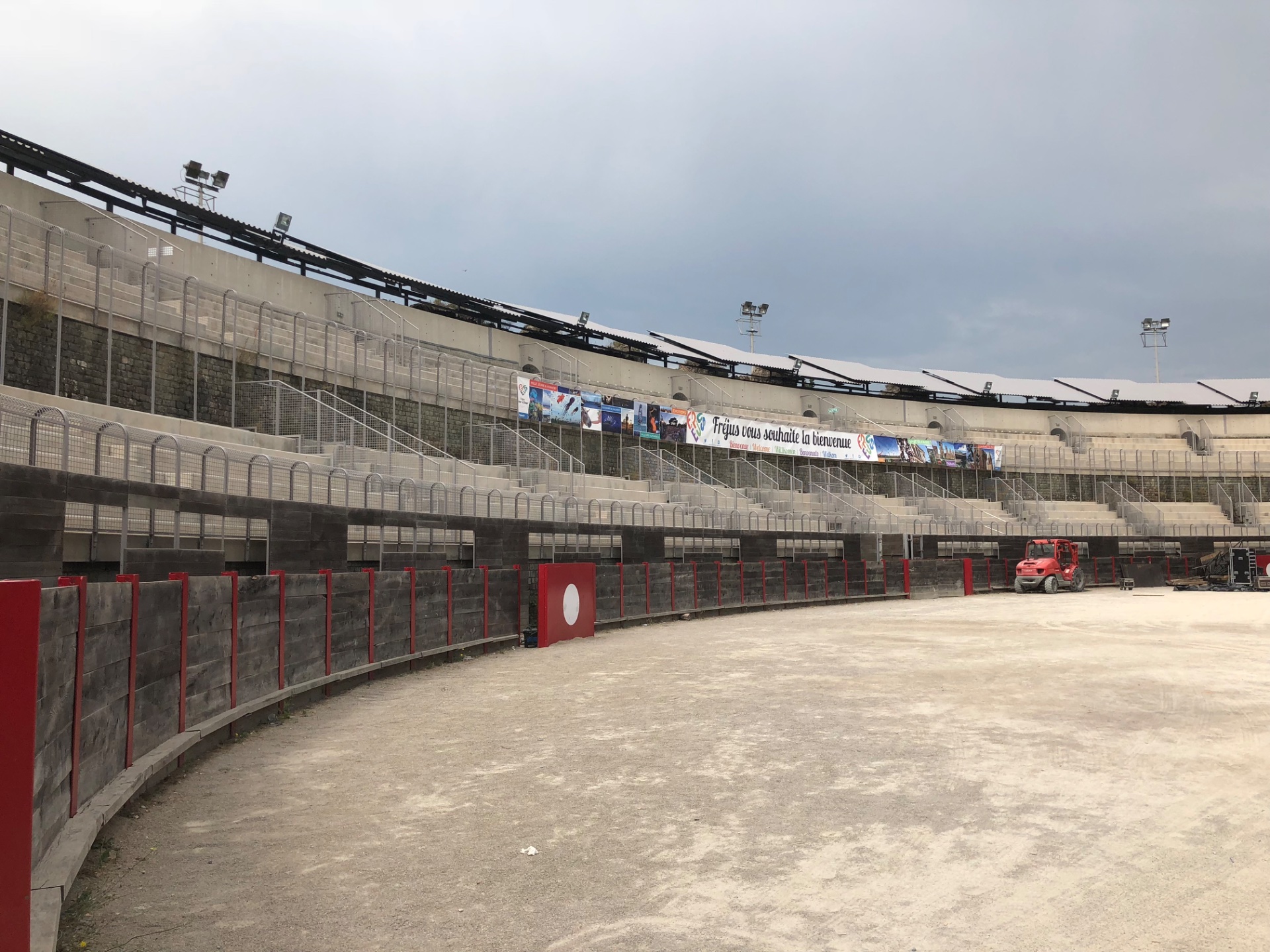
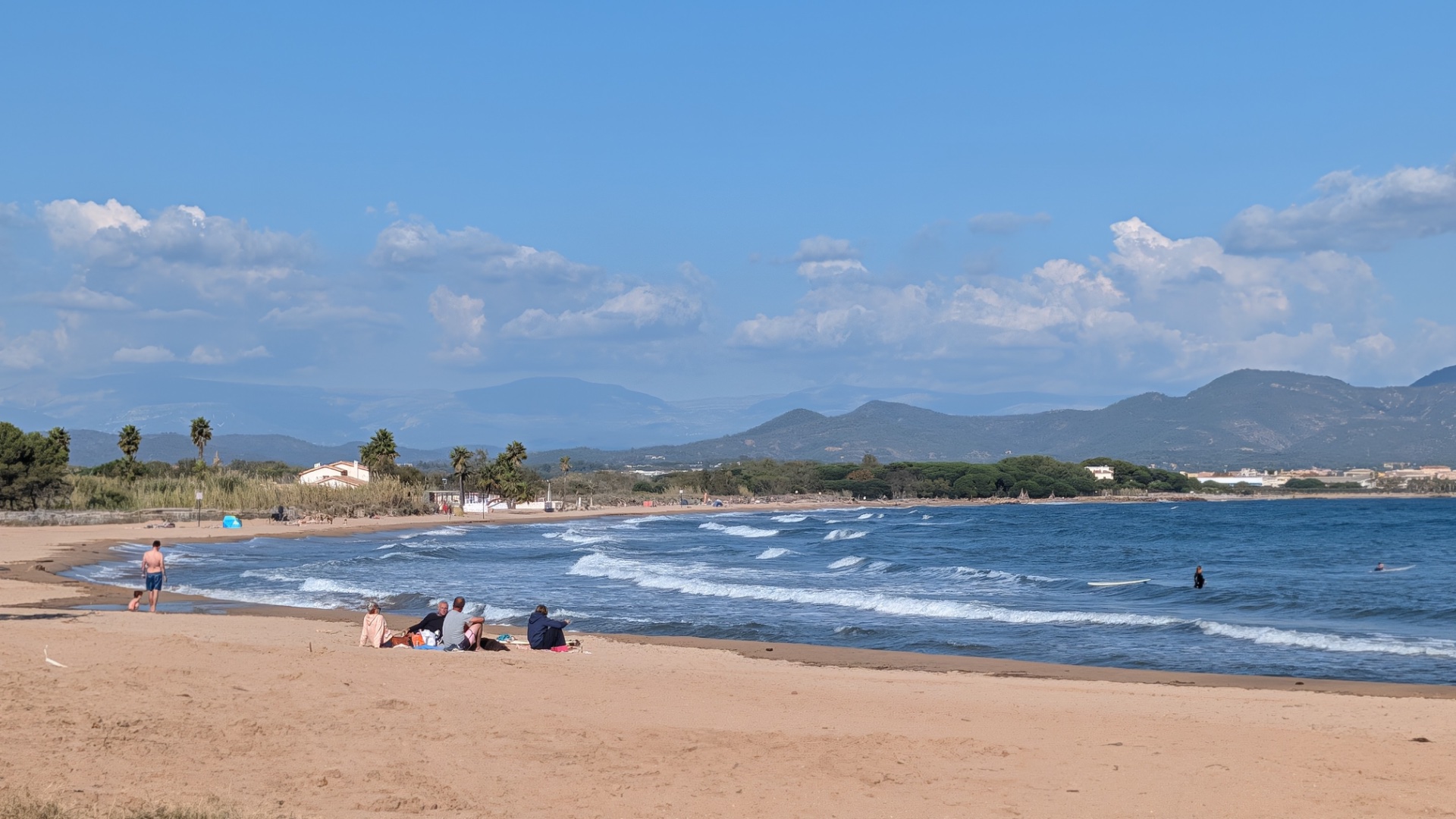
Open in MapsFréjus is a Var town on the coast west of the Estérel, with a Roman arena, a walled historic center built on the Roman city, a modern marina at Port-Fréjus and long sandy beaches.
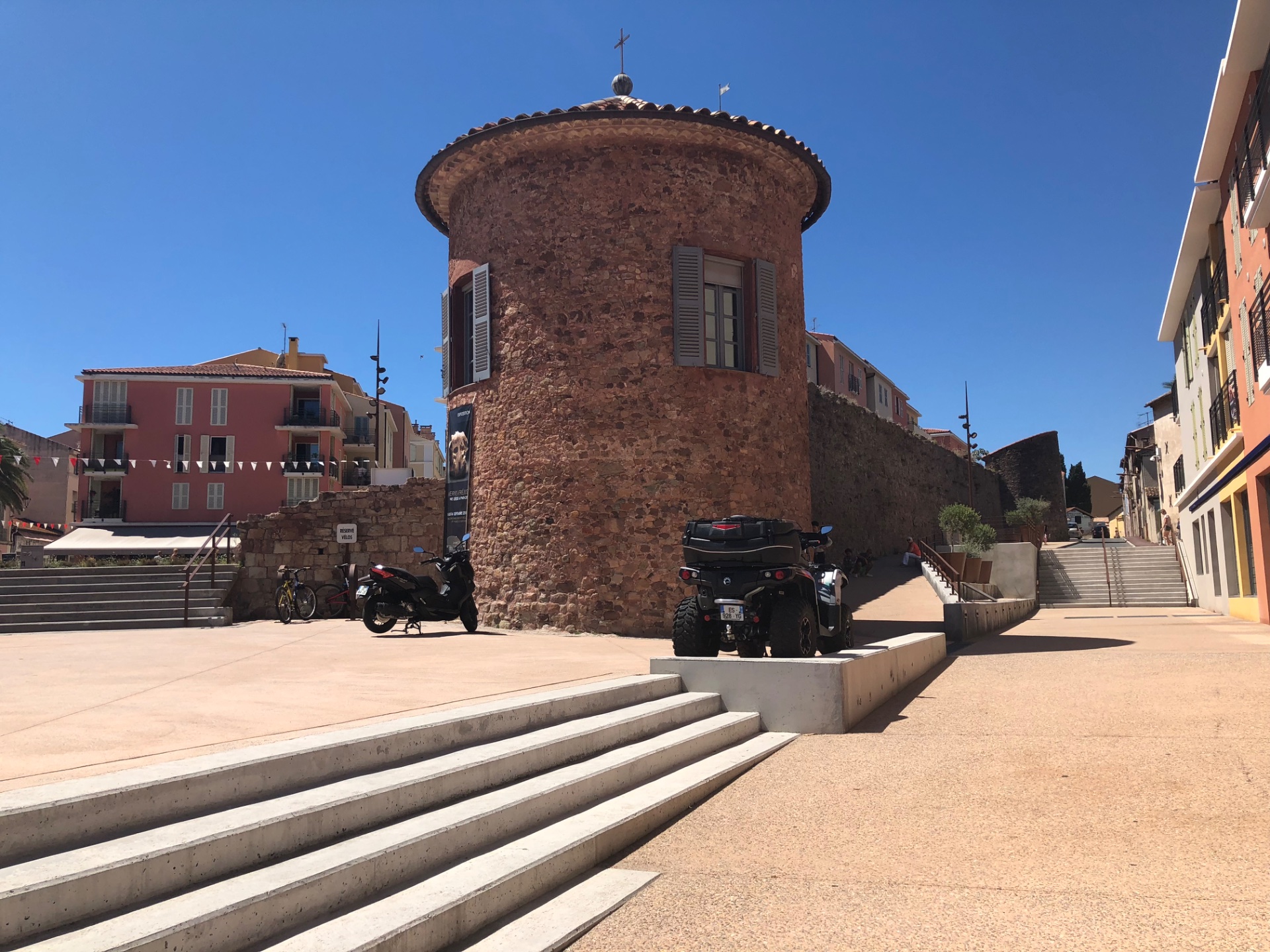
Near the edge of the old town, on dry land, stands a stone tower called the Lanterne d'Auguste. Two thousand years ago it marked the entrance to one of the most important Roman harbors in Gaul. The sea has since pulled back, and the tower now looks out over streets and gardens. Much of the Roman town is still here around it, from the arena to stretches of the old walls. So is a busy coastal town of more than 50,000 people, which built itself a new harbor a short walk downhill.
Julius Caesar founded the town, most likely in 49 BC, and named it Forum Julii, the market of Julius. Augustus turned it into a naval base and moored the warships he captured at Actium in its harbor, about 330 of them according to the Roman ports research project. For a while this was the only base of the Roman fleet in Gaul. The general Agricola, who later governed Britain, was born here, and there is a statue of him in the historic center. By the 10th century the harbor had silted up and left a marshy plain between the town and the shore.
The Romans left more behind in Fréjus than almost anywhere else in the Var. The arena, on the western edge of the center, was built in the 1st century and could hold crowds of around 12,000. Today it seats about 5,000, and it has a second life as a concert venue: Queen, David Bowie and Tina Turner have all played inside its walls. You can still walk out onto the sand of the arena floor. Beyond it, the theatre has been restored with a modern iron frame over the old stone, and pieces of the aqueduct, which ran for 42 km, still stand as arches on the edge of town. Bits of the Roman rampart and the Porte des Gaules, one of the four main gates, are scattered through the streets.
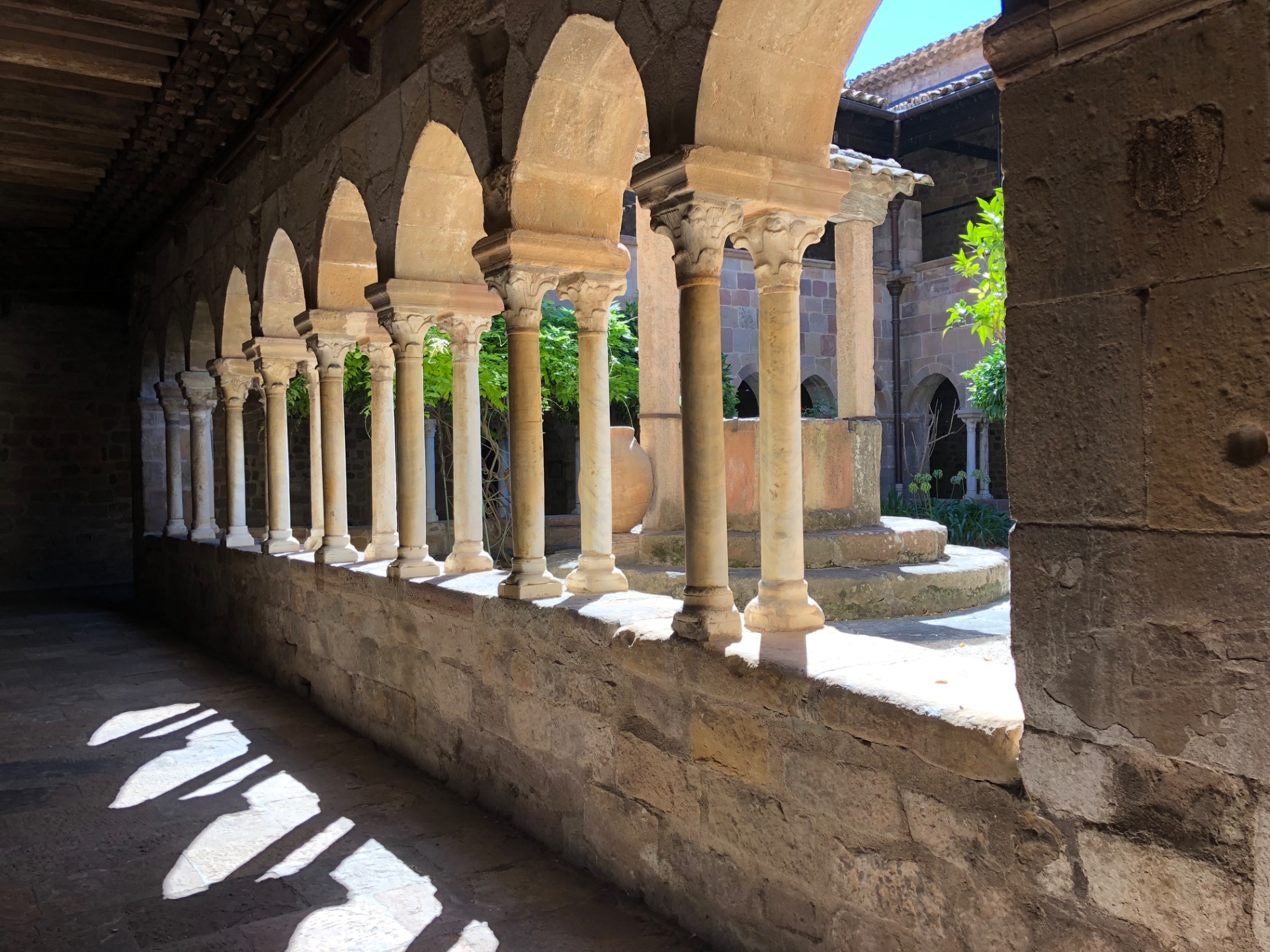
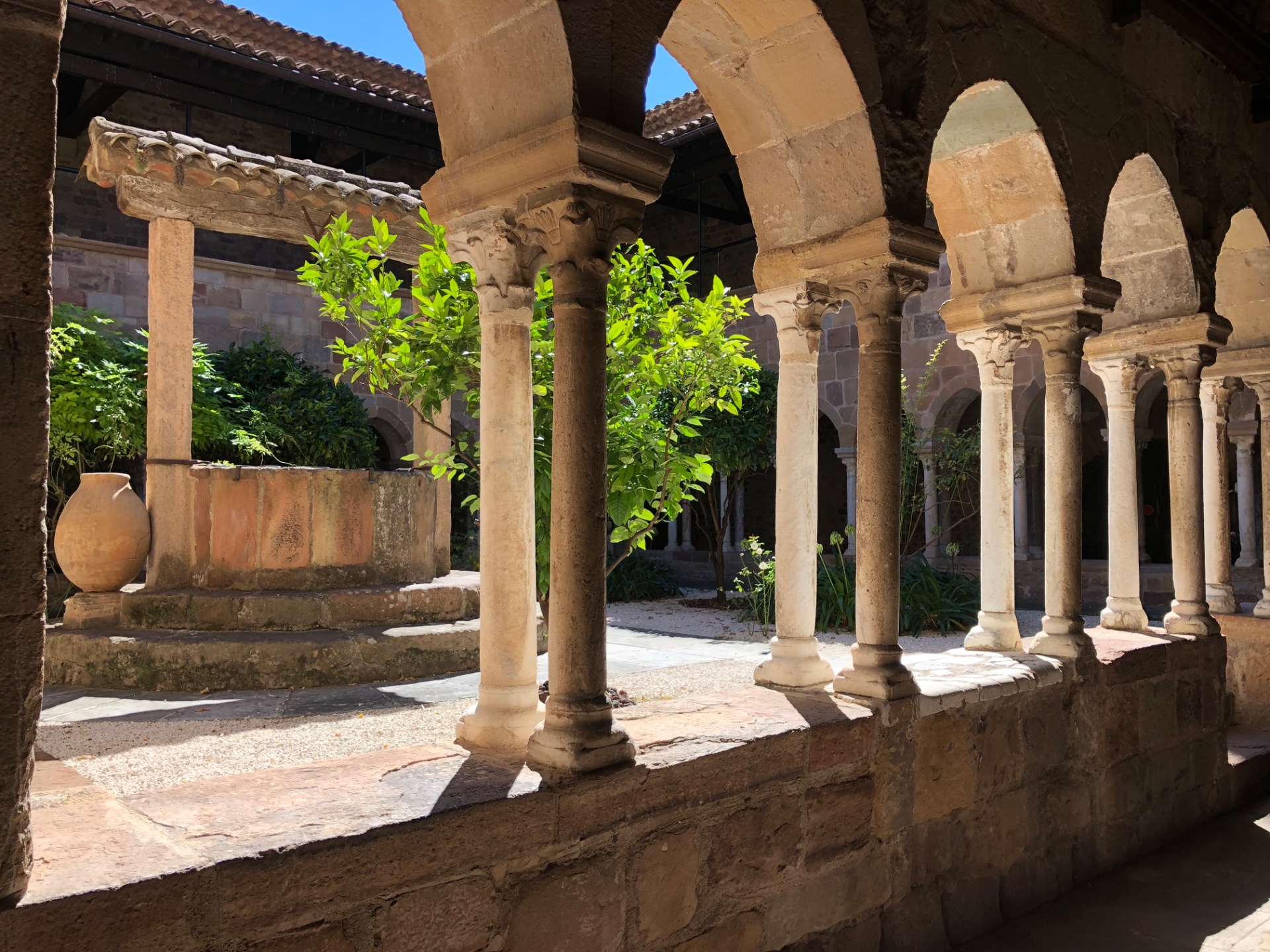
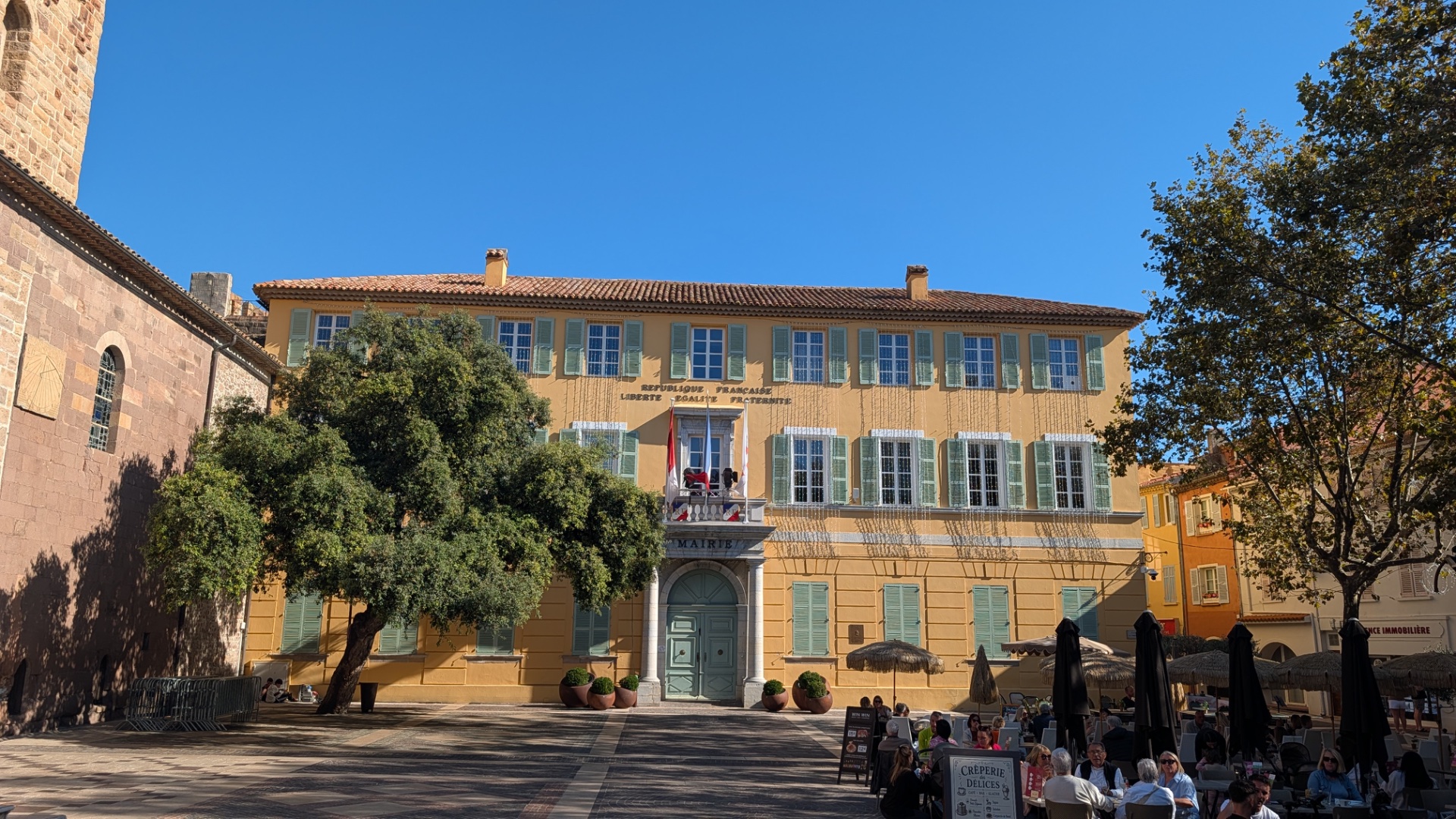
The old convent you may have heard about is the cathedral cloister, and it is the best reason to come. The cathedral, the baptistery, the cloister and the former bishop's palace (now the town hall) form what the French call the groupe épiscopal, the bishop's complex. The octagonal baptistery is from the 5th century, built around eight Roman columns, and is one of the oldest Christian buildings in France. The cloister belonged to the canons, the priests who lived and worked with the bishop. Look up when you walk its galleries. The wooden ceiling is painted with hundreds of small panels from the 14th and 15th centuries: angels, devils, hunters, acrobats and monsters, drawn with the energy of a comic strip. Around 500 of an original 1,200 survive, and nobody knows for certain who painted them or why.
Outside the center, two more sights are worth the bus ride or the drive. The Chapelle Notre-Dame-de-Jérusalem was designed by Jean Cocteau, who started it in 1963 and died that October before it was finished. His adopted son Édouard Dermit completed the interior from his drawings. The Pagode Hông Hiên, built in 1917 by soldiers from Indochina stationed in Fréjus during the First World War, is described by the region's tourist board as the oldest pagoda in Europe, and it is still an active Buddhist temple.
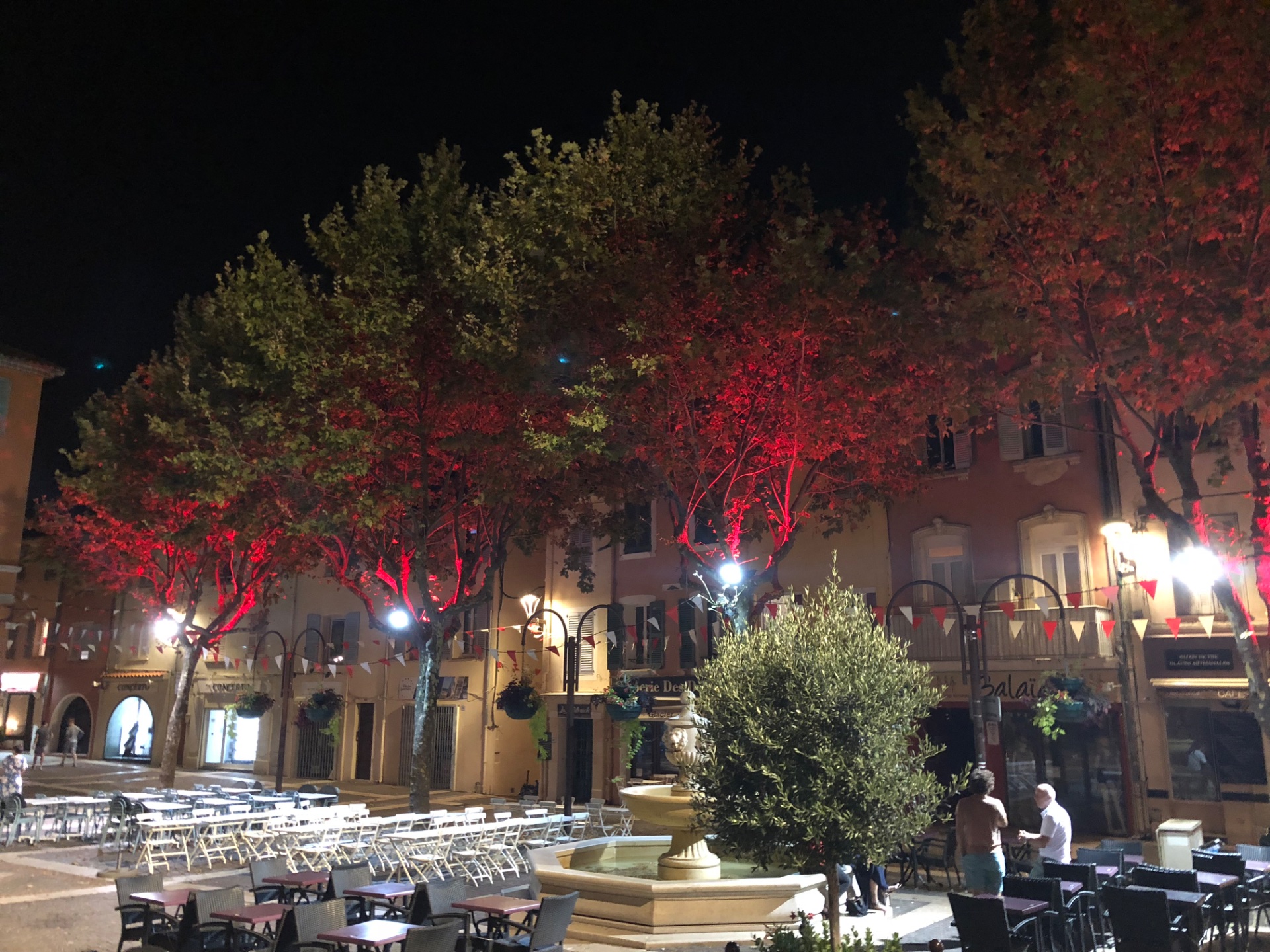
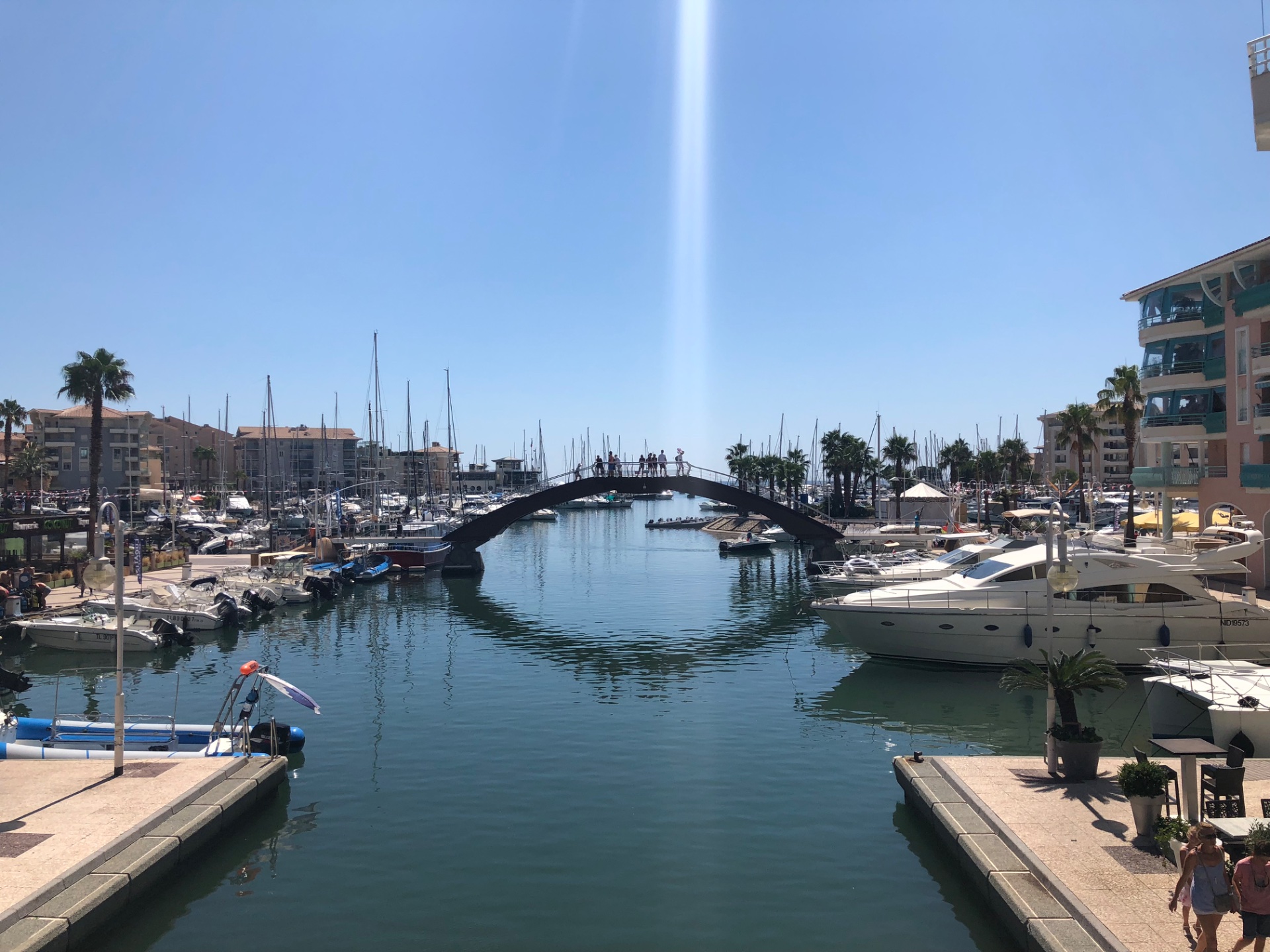
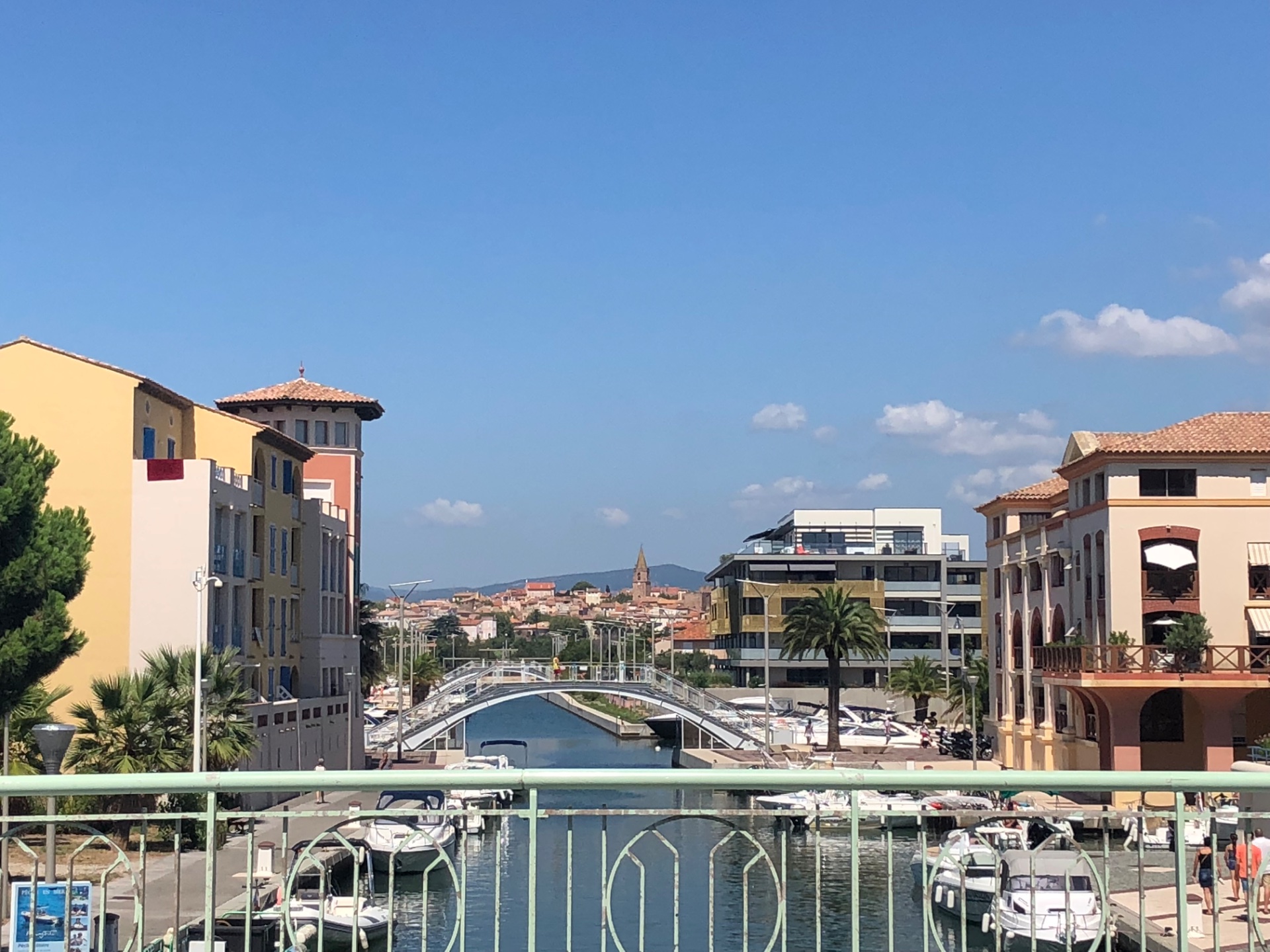
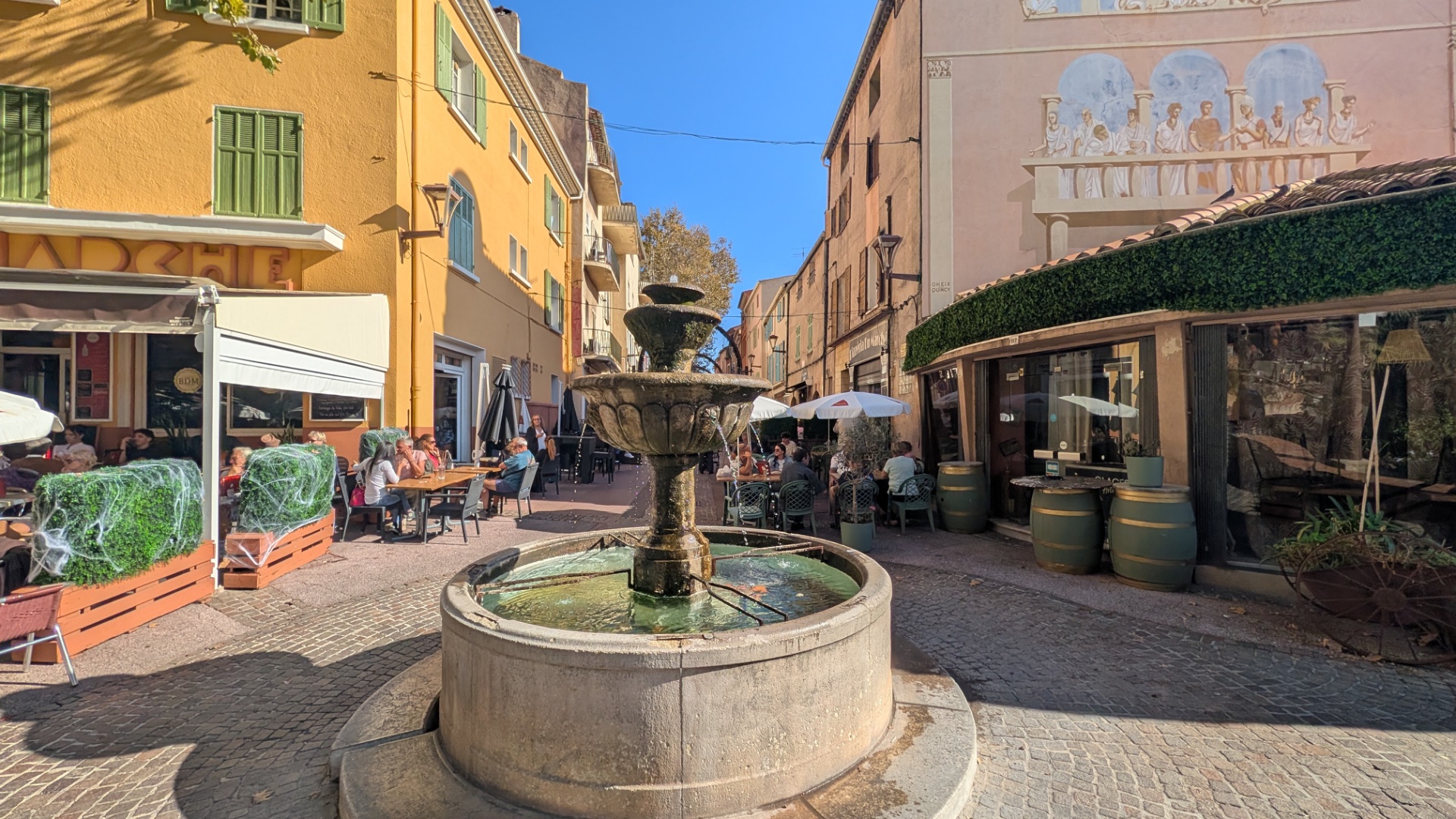
Then there is the other Fréjus. Walk downhill from the walled center toward the sea and the town changes completely. Port-Fréjus opened on July 12, 1989, a marina dug out of the flat land the old harbor left behind, with ochre and pink apartment buildings around the water, cafés on the quays and several hundred boats. Beyond it runs Fréjus-Plage, the long sandy beach with its promenade and beach restaurants, and to the southwest the separate seaside district of Saint-Aygulf. The two halves of Fréjus belong to the same town and almost nothing else: narrow lanes and medieval stone up the hill, open quays and sand below, about two thousand years apart in age.
Come back to the Lanterne d'Auguste at the end of the day. The tower still points to the harbor that was here, and down the hill, a marina full of boats is doing the same job again.
Market days
- Fréjus and Saint-Aygulf
Tuesday and Friday unconfirmed
- Port and Arènes
Thursday
- Market
Saturday unconfirmed
- Seafront
Sunday
What’s on
Past events
Festival
Dark Arena Festival
Festival
Terreur aux Arènes
Cultural
Fréjus fête Halloween
Festival
Festival Vintage & Artisanal