Town / Village
Évenos
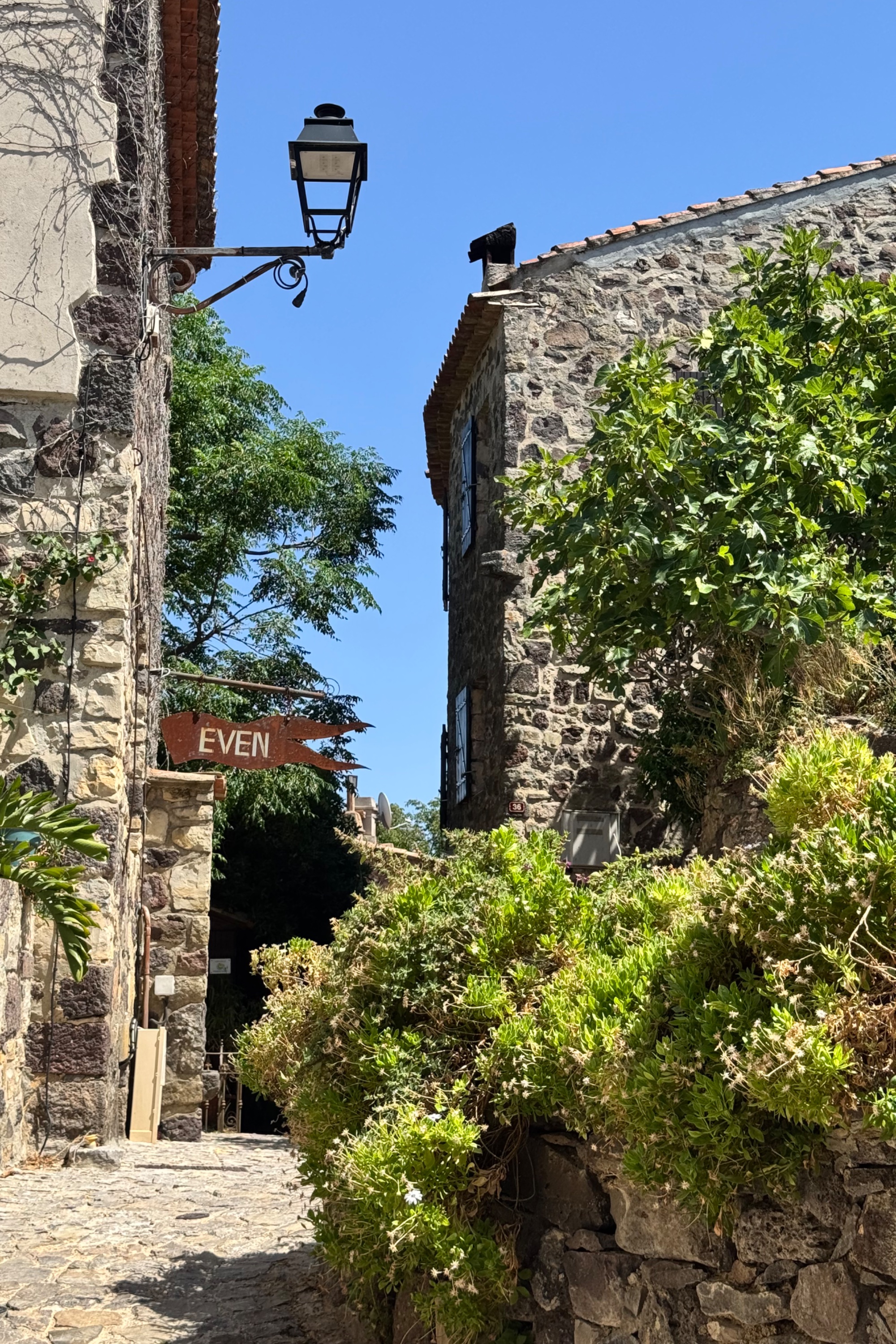
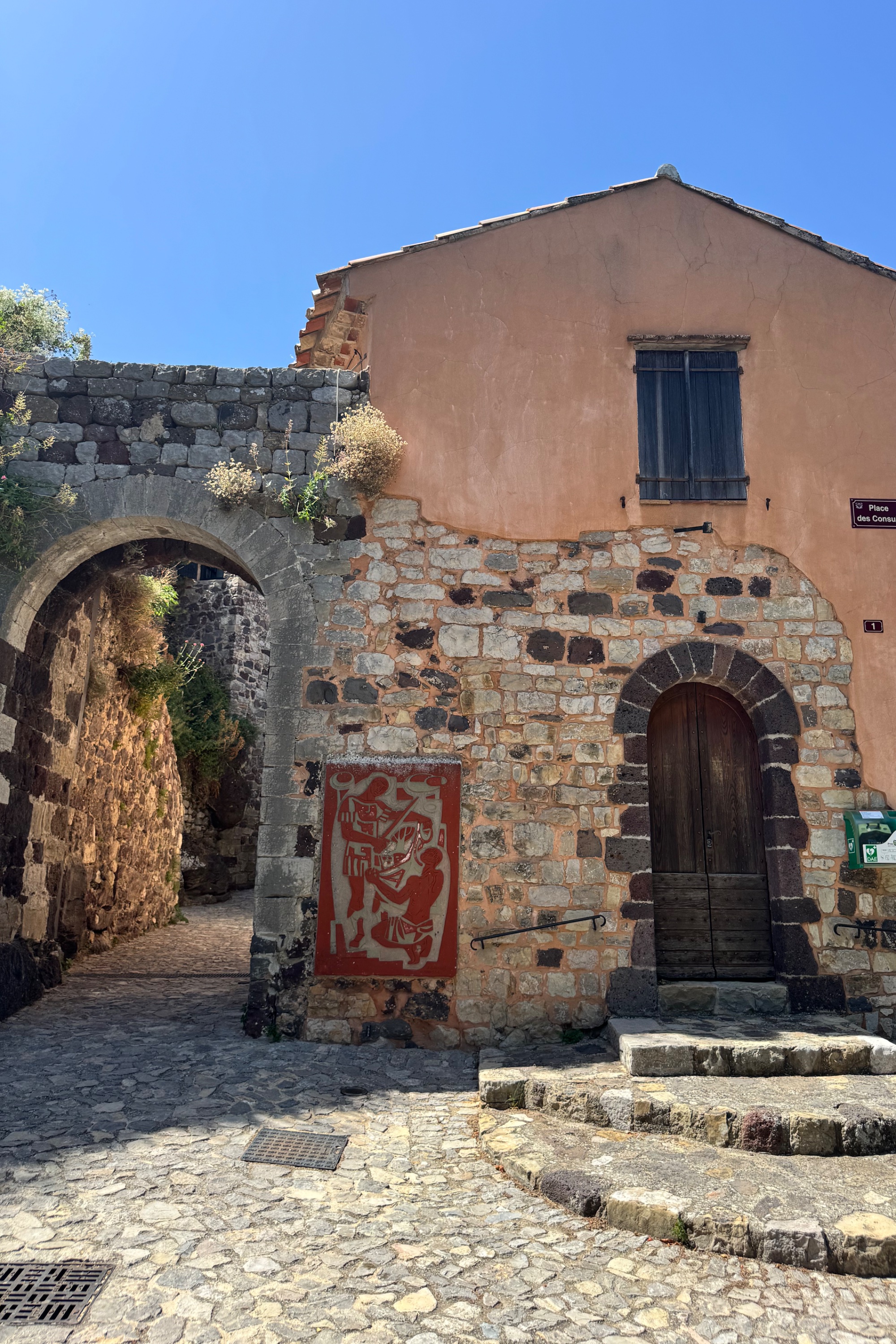
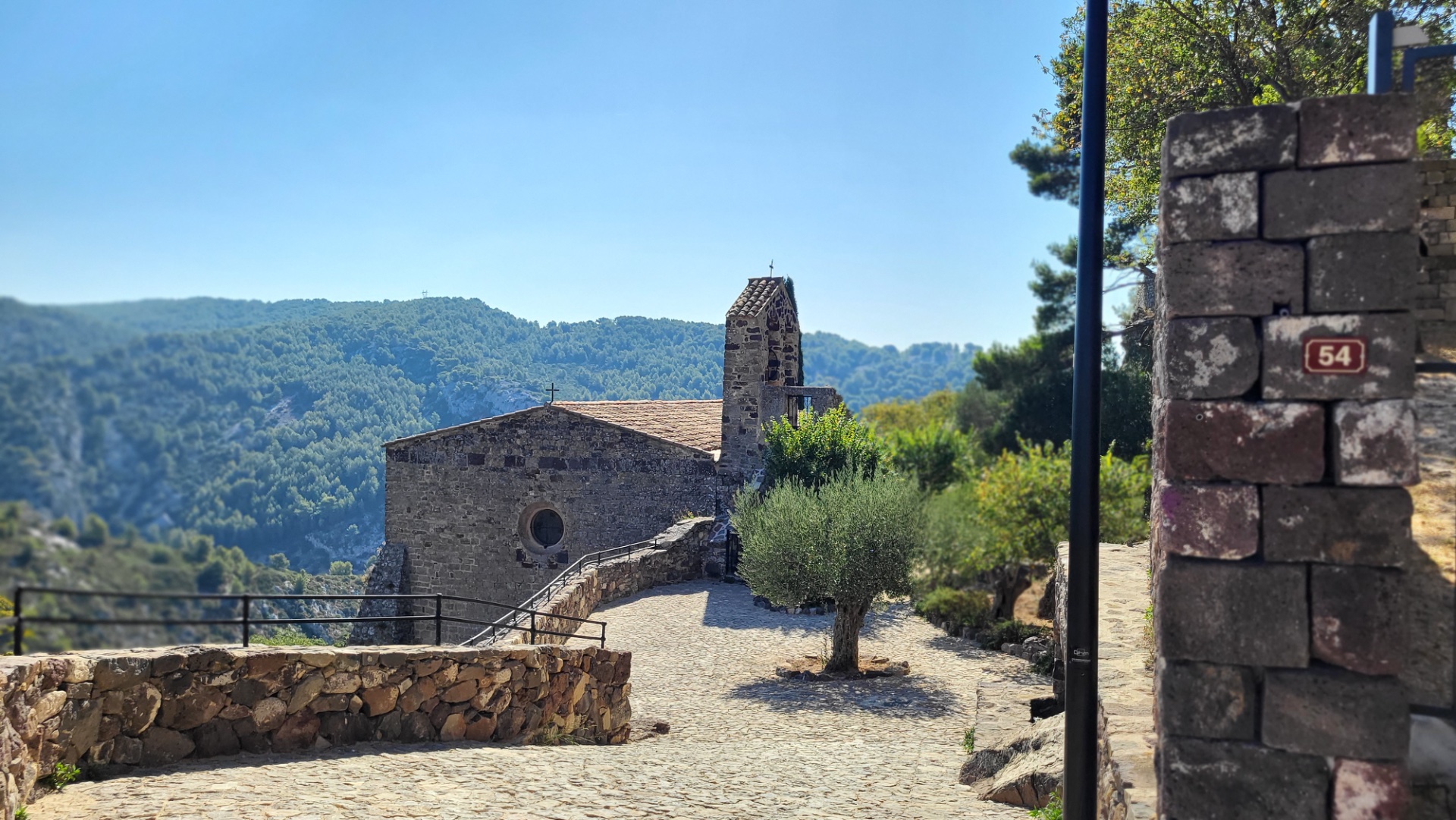
Open in MapsDrive through enough Provençal villages and you start to expect the same palette: honey-colored limestone, ochre render, pale stone walls. Then you climb above the Gorges d'Ollioules to the old village of Évenos and everything turns dark gray, almost black. The houses, the ramparts, the church and the castle are built from basalt, the rock that forms when lava cools.
That lava is around six million years old, young by geological standards, which makes this one of the most recent volcanic sites in mainland France. There was no classic cone and no crater. The magma rose through cracks in the limestone and spread out in flows that ran south toward the sea. The basalt table starts near the Rocher de l'Aigle, north of the village, and reaches the coast at Cap Nègre in Six-Fours, about 13 km away. Locals call the whole system the coulée d'Évenos, the Évenos flow.
The people who built the village used what was under their feet. Every wall in the old center is a patchwork of dark volcanic blocks, some smooth, some pitted with small holes left by gas bubbles in the cooling lava. Giant basalt boulders sit around the edges of the village where the flow broke apart. Basalt was also quarried here for roads. The old village is still widely called Nèbre, and the local explanation ties the name to a root meaning burned, or black. Whether or not the etymology holds, it fits.
Nèbre sits on a volcanic spur, and that position is why anyone built here at all. The valley below was raided repeatedly in the early Middle Ages, and the inhabitants moved up to the rock, where a first castle went up around the 10th century. The ruins you see today date mostly from the 12th century and from a rebuild around 1600: a pentagonal keep, medieval walls and the shell of a Renaissance residence. Saint Louis is said to have stopped here in 1254, after landing at Hyères on his way home from crusade. The castle is privately owned and closed to visitors, but you can walk up close to its walls.
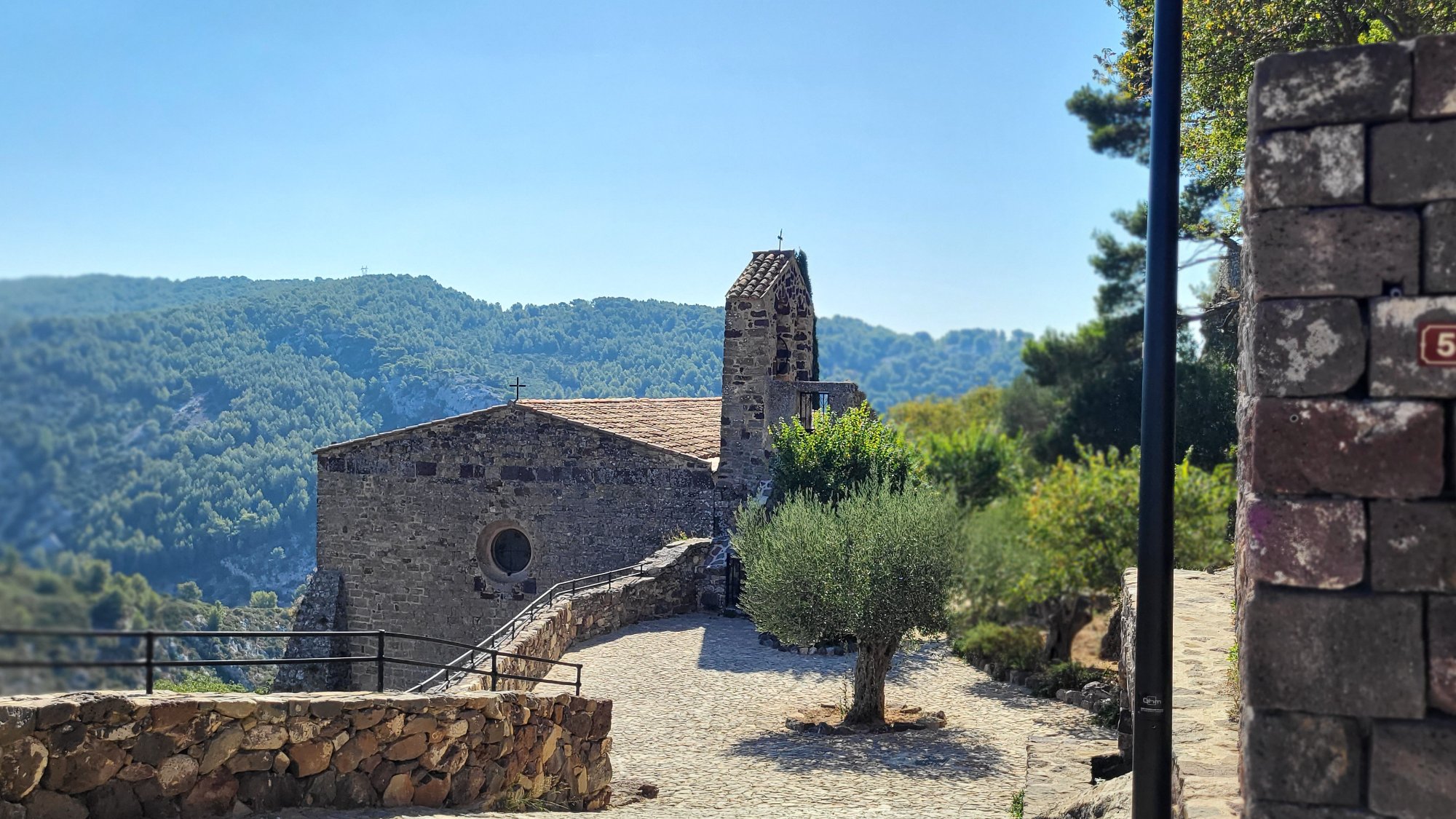
Just below it stands the Romanesque church of Saint-Martin, built in the same dark stone. It was originally part of the defenses, with a terrace reached from the walkway along the ramparts. A roof and a simple bell wall, the clocher-mur you see in many Provençal hill churches, were added in the 18th century. In the same century the village began to empty as families moved down to the plain, and today the town hall and most of the commune's 2,400 residents are in the hamlet of Sainte-Anne-d'Évenos, with Le Broussan as the third hamlet.
The volcano also left a local legend. The devil was said to live in the castle, tormenting the villagers, until Saint Martin challenged him to cross the gorge in three leaps. The saint made it. The devil fell short on the third jump and landed in the bed of the Destel, and people still go looking for the mark he left in the rock.
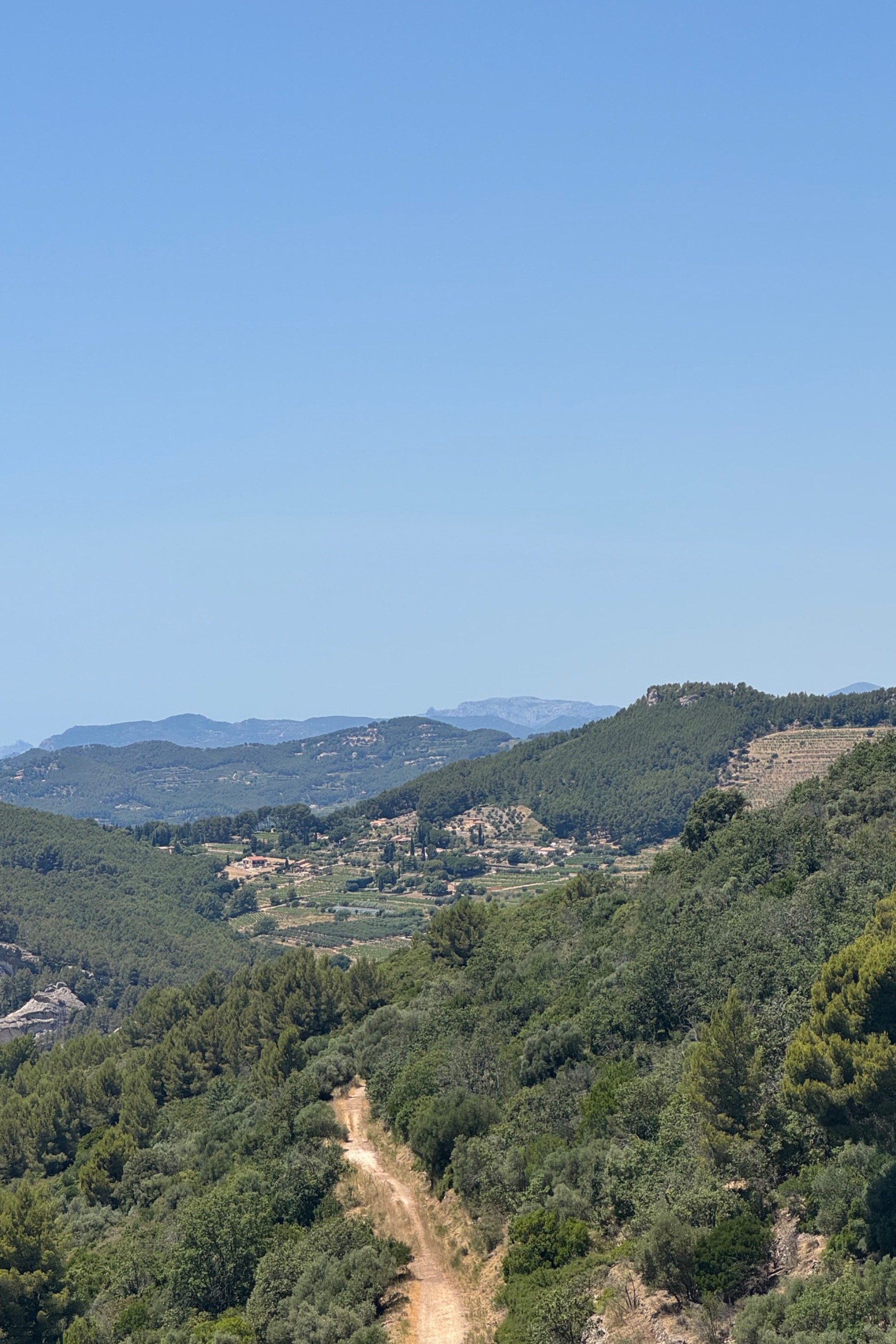
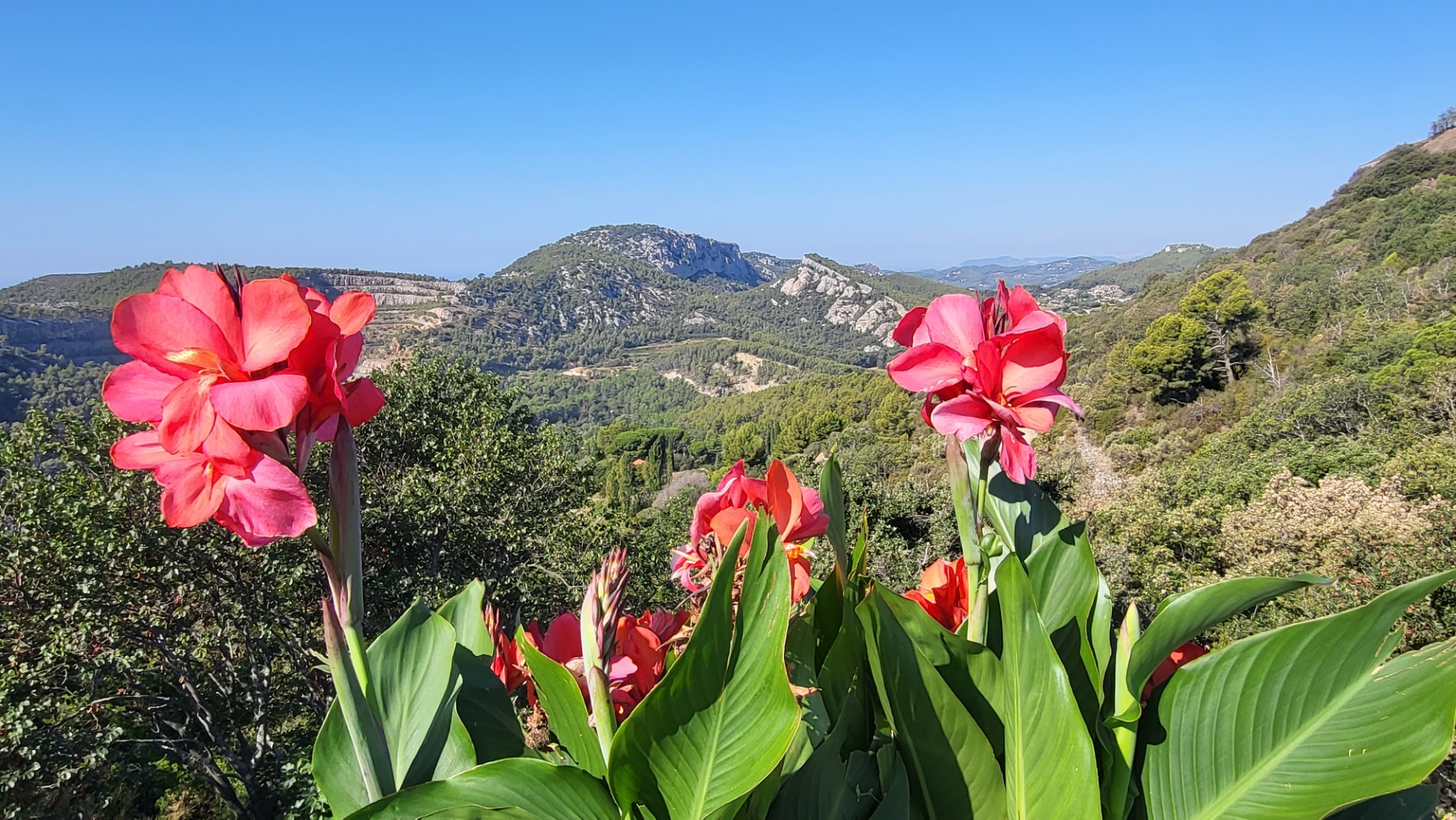
What brings most visitors up today is the view. From the top of Nèbre you look straight down into the gorges and out over the harbor of Toulon, with the coast stretching west toward La Ciotat on a clear day. The Destel gorges below are popular with climbers, and the 1890s Fort de Pipaudon on the next knoll, built to guard the Toulon harbor, is visible but closed.
Touch a wall on your way out. It was liquid once.
Market days
- Sainte-Anne
Wednesday: 8 am to 12:30 pm (April 26 to October 15)